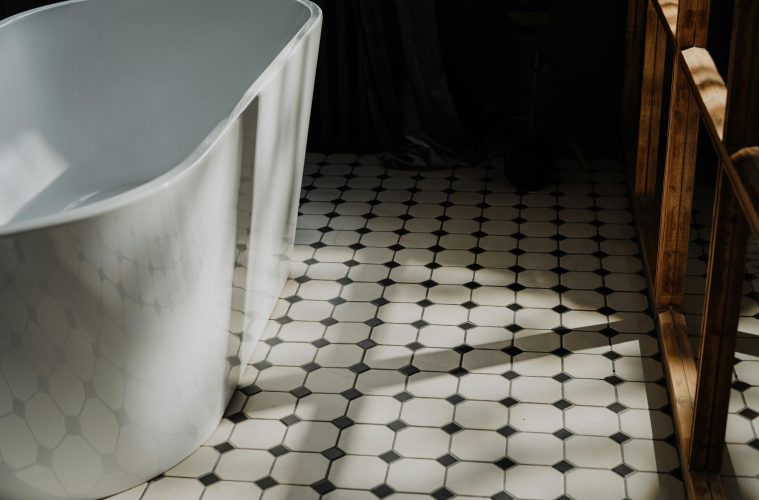
Original tiled floors carry history underfoot. Whether it is Victorian encaustic tiles in a hallway or sturdy quarry tiles in a kitchen, these surfaces were built to last. But time, movement and moisture can take their toll.
Cracks, loose tiles and surface staining are common, particularly in older properties where floors were laid on lime mortar and flexible sub-bases. The key to successful repair is understanding how these floors were constructed and working with the materials rather than against them.
Here is how to approach tile repairs properly, when to attempt a fix yourself and when to call in a specialist.
Start by diagnosing the problem
Before lifting a single tile, inspect the entire floor carefully. Hairline cracks, loose tiles, hollow sounds underfoot or uneven areas may indicate movement beneath the surface.
Traditional tiled floors were often laid on a lime mortar bed over clinker or hardcore. This system was designed to breathe and shift slightly over time. However, subsidence, timber decay beneath suspended floors or prolonged moisture can cause instability.
If multiple tiles are loose or there are signs of significant movement, the issue may lie below the surface. In those cases, structural repair should take priority before cosmetic work begins.
How to fix cracked or loose tiles
Not every crack requires replacement. If a tile is firmly bonded and the crack is purely cosmetic, it may be best left undisturbed to avoid causing further damage. When a tile is loose or badly fractured, removal is necessary. This should be done carefully to avoid disturbing the surrounding tiles.
Use a small chisel or multi-tool to remove grout around the damaged tile first. Work slowly, easing the tile up rather than forcing it. On older floors, the mortar bed can be fragile and easily compromised.
Once removed:
- Clear away old adhesive and debris
- Check the sub-base for damage
- Reinstate any weak areas before relaying
For period floors, lime-based mortar may be more appropriate than modern cement in certain settings, particularly in heritage properties where breathability matters.
Also see: Where to put motion-sensor lights indoors to save energy and boost security
Matching replacement tiles properly
One of the biggest challenges in repair is colour matching. Historic tiles were handmade or kiln-fired in batches, meaning variations in shade and thickness were common.
When sourcing replacements:
- Take a clear, square-on photograph of the original
- Measure thickness and dimensions precisely
- Consider custom reproduction if the pattern is decorative
A slightly imperfect match often looks more authentic than a tile that appears obviously new. The goal is visual harmony rather than exact replication.
Removing old adhesive and surface staining
Many original tiled floors have been covered over the years with linoleum, vinyl or carpet. Removing old adhesive requires patience. Solvent-based adhesive removers or specialist tile cleaners can soften residues. Avoid aggressive grinding or harsh acids unless necessary, as these can damage the tile surface.
For stubborn cementitious residue left from previous repairs, a mild acidic cleaner designed for tile restoration may be appropriate. Always test in a discreet area first. After cleaning, allow the floor to dry thoroughly. Efflorescence, which appears as white powdery salts, may surface during drying. This should be brushed or vacuumed away gently.
Also see: Ways to use leftover candle wax in your home
Re-grouting and refinishing
Once repairs are complete and the floor is fully dry, re-grouting can restore cohesion.
Modern grout offers durability, but in older homes, a lime-based grout may be preferable to maintain breathability. Choose a neutral tone that complements rather than dominates the tiles.
To finish the surface, sealing is recommended. Historically, wax-based finishes were common. Today, breathable sealants protect staining while maintaining a natural appearance. Satin finishes tend to be easiest to maintain. Gloss finishes can look modern and may not suit period floors.
When replacement is unavoidable
There are circumstances where full replacement becomes the more practical option. Extensive subsidence, widespread cracking or water damage may make piecemeal repair uneconomical.
However, before opting for removal, consider the character and longevity of the existing floor. A repaired original often outlasts modern alternatives and adds architectural value to a property.
Patina, slight unevenness and wear are not flaws. They are part of the floor’s story.
Repairing floor tiles is about preservation rather than perfection. Work gently. Respect original materials. Address structural issues before aesthetic ones.
When in doubt, consult a specialist, particularly with heritage or encaustic floors. A thoughtful repair will not only restore beauty but also ensure the floor continues to perform for decades to come.
Feature Image: Gettys
Compiled by Jade McGee
First published on Garden and Home
Also see: How to create a sensory haven using natural and tactile materials
Be the first to know – Join our WhatsApp channel for content worth tapping into. Click here to join!