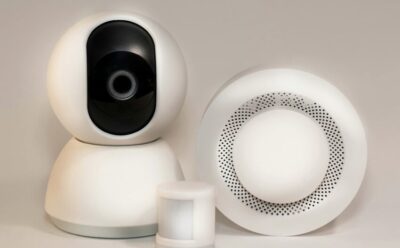
Motion-sensor lights do two useful jobs. They cut wasted lighting hours and make night-time movement safer while giving the impression of an occupied, alert home. Here is a practical, room-by-room plan you can fit in over a weekend.
Best spots in a typical home
Passages and landings are classic energy leaks because they are high-traffic and often left on. A ceiling PIR with a short timeout keeps the light on only while someone is passing through. Staircases benefit from a ceiling PIR or low-level step lights, so you avoid switching the big light on and forgetting it later. In guest loos and bathrooms, sensor bulbs or PIR-controlled downlighters make sense; set a brief timeout so lights do not run between visits. At the entrance or internal lobby, pair a dusk sensor with a PIR so the system only arms after dark and gives instant light when you unlock the door, which is both convenient and a subtle deterrent.
In the kitchen, scullery and pantry, rechargeable magnetic under-cabinet bars provide task light on demand without powering the whole circuit, ideal for quick tea runs after lights-out. In the garage and at the inter-leading door, a sensor bulkhead set to a few minutes gives hands-free light when you park or carry things in. For children’s rooms, plug-in motion night lights near the approach keep the glow low so you can check in without flooding the room. Storerooms, linen cupboards and wardrobes are best served by door-triggered or motion LED strips, so small spaces do not become kilowatt-hour leaks.
Also see: Natasha Vermaak reveals her home renovation nightmare
What to use and where
Sensor bulbs are the easiest retrofit. Screw them into an existing lamp holder and leave the wall switch on. They suit loos, passages and porches. A ceiling PIR with downlighters is the best solution for passages, stairs and garages because you can set both the timeout and the lux threshold. Dusk sensors belong at entrances and lobbies and work well when they feed a PIR, so the system only responds after dark.
Rechargeable LED bars or strips, mounted magnetically and charged by USB, are perfect in cupboards and under counters. Plug-in night lights give a gentle, motion-activated glow for routes you walk after hours. If you already run smart bulbs, add an indoor motion sensor and create a low-brightness night scene.
Settings that actually save energy
Timeouts should be short in passages and loose, roughly 45 to 60 seconds, and longer in garages and entrances, around two to five minutes. Set the lux threshold to trigger only in low light, so you are not burning watts in daylight. Dial down sensitivity and narrow the detection angle to avoid false triggers from pets or adjacent doorways. At night, you rarely need full output, so set smart scenes to 20 to 40 per cent for safe movement with lower draw.
Security wins with no extra fuss
Movement-based lighting suggests activity inside, which helps deter opportunists. Automatic light on stairs, landings and entrances reduces falls and avoids leaving circuits on. Hands-free access means the room lights as you enter with bags, prams or keys, so there is no fumbling at the switch.
A quick placement map
Keep manual control in the lounge by day, then add a motion night scene at reduced brightness after a set time. Skip full-room motion in bedrooms and use low-glow guides near the door or floor instead. In kitchens and sculleries, under-cabinet motion bars cover after-hours tasks without waking the house.
For a passage or landing, place one central PIR clear of draughts from fans or open windows. On stairs, fit a PIR at the top or mid-landing and consider step lights for extra safety. At the entrance or lobby, let a dusk sensor feed a PIR so it wakes only at night.
Also see: Smart shelving ideas to elevate your bedroom
Safety and compliance
Sensor bulbs, plug-in night lights, and rechargeable bars are DIY-friendly and do not require wiring. However, new PIRs or day-night sensors should be hard-wired by a registered electrician, and it is important to keep your Electrical CoC current.
Basic test and tune for a ceiling PIR
1. Power off at the board and verify with a tester.
2. Mount the sensor clear of direct sun or HVAC draughts.
3. Wire live in, switched live out and neutral as specified.
4. Start with the lux set to night-only and the timeout to 60 seconds.
5. Restore power, walk-test the area, then tweak sensitivity last.
Compiled by Jade McGee
First published on Woman and Home
Also see: How to clean upholstery properly (without damaging your couch)