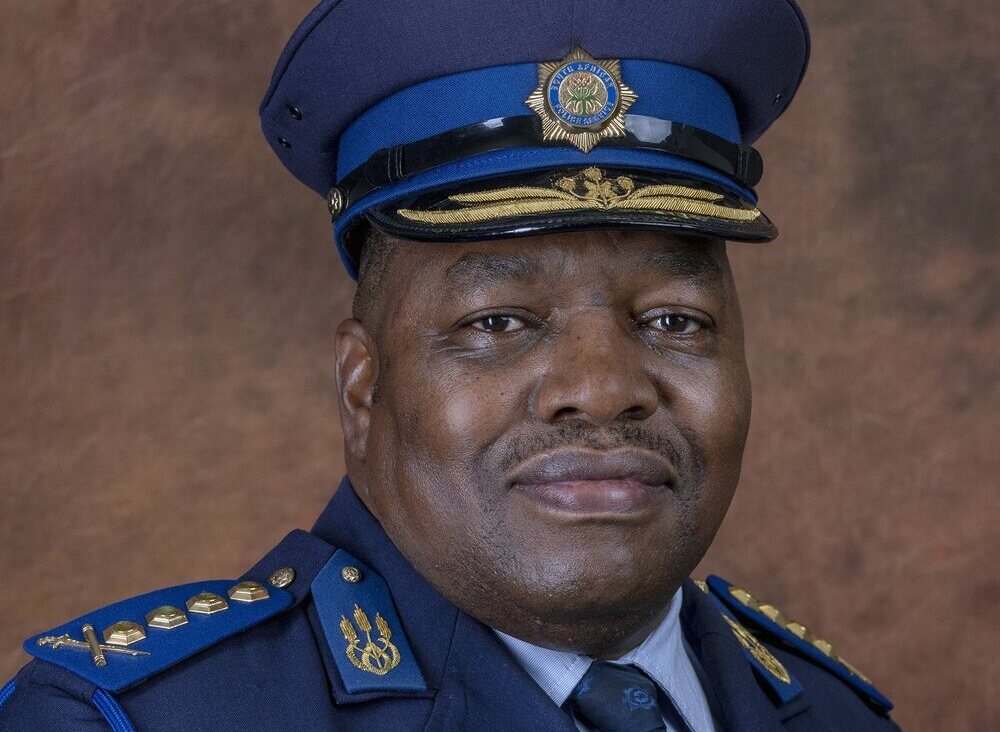
President Cyril Ramaphosa’s decision to lift the suspension of National Police Commissioner General Fannie Masemola has brought renewed attention to police leadership, accountability and the oversight of the South African Police Service (SAPS).
Also see: Fannie Masemola breaks silence after charges are withdrawn
The development raises questions about the circumstances surrounding the suspension, the commissioner’s status and how any outstanding investigations or disciplinary processes will proceed.
Suspension lifted after charges were withdrawn
Fannie was placed on precautionary suspension in April 2026 after appearing in the Pretoria Magistrates’ Court on charges of contravening the Public Finance Management Act (PFMA). The charges related to alleged failures involving financial oversight and procurement controls linked to a police healthcare services contract awarded to Medicare24. Fannie denied the allegations, according to reporting by Reuters.
The National Director of Public Prosecutions instructed that the charges be withdrawn on 15 September 2026, and the Pretoria Magistrates’ Court formally withdrew them on 22 September 2026. The Presidency confirmed on 16 October 2026 that the suspension had been lifted and that Fannie would resume his full duties on Monday, 19 October 2026.
The decision follows months of uncertainty over the leadership of the country’s police service, with Lieutenant-General Puleng Dimpane serving as acting national commissioner during Fannie’s absence.
BREAKING NEWS : President Cyril Ramaphosa has FINALLY “uplifted” the suspension of national police commisisoner Fanie Masemola. He will be back to work on Monday. The President has welcomed the Commisisoner on his return to his duties and thanked the acting Commisisoner Puleng Dimpane for acting in the interim.
— Clement Manyathela (@TheRealClementM) October 16, 2026
Also see: NPA withdraws charges against police commissioner Fannie Masemola
Police accountability remains under scrutiny
Fannie’s return comes as South Africa continues to examine allegations of corruption and criminal networks within law enforcement.
The Medicare24 contract has also featured in wider scrutiny surrounding alleged links between criminal networks and parts of the criminal justice system. The Madlanga Commission of Inquiry is investigating allegations of police collusion with organised crime, placing questions about procurement, oversight and institutional accountability at the centre of public debate.
While the withdrawal of the charges against Fannie led to the lifting of his suspension, the development should be distinguished from the broader accountability questions facing SAPS. The withdrawal of a criminal case does not, by itself, resolve every concern surrounding the institution or any separate investigations.
What Fannie Masemola’s return means for SAPS
In its announcement, the Presidency welcomed Fannie’s return and thanked Puleng for her service as acting national commissioner. Acting Police Minister Firoz Cachalia also welcomed the decision, saying the return provides an opportunity for SAPS leadership to focus on operational priorities and the government’s Police Reset Agenda, which includes professionalism and accountability.
Fannie’s return places him back at the head of the country’s national police service at a time when public confidence, internal governance and the fight against organised crime remain major issues.
The key question going forward is how SAPS leadership will maintain operational stability while strengthening oversight and accountability across the institution.
For South Africans, the lifting of the suspension marks the end of Fannie’s immediate period away from office. The wider debate over police governance, procurement controls and public trust, however, continues.
Featured image: X/@CrimeWatch_SA
Also see: Fannie Masemola back in the dock as R228m Medicare24 case continues
Be the first to know – Join our WhatsApp channel for content worth tapping into. Click here to join!