
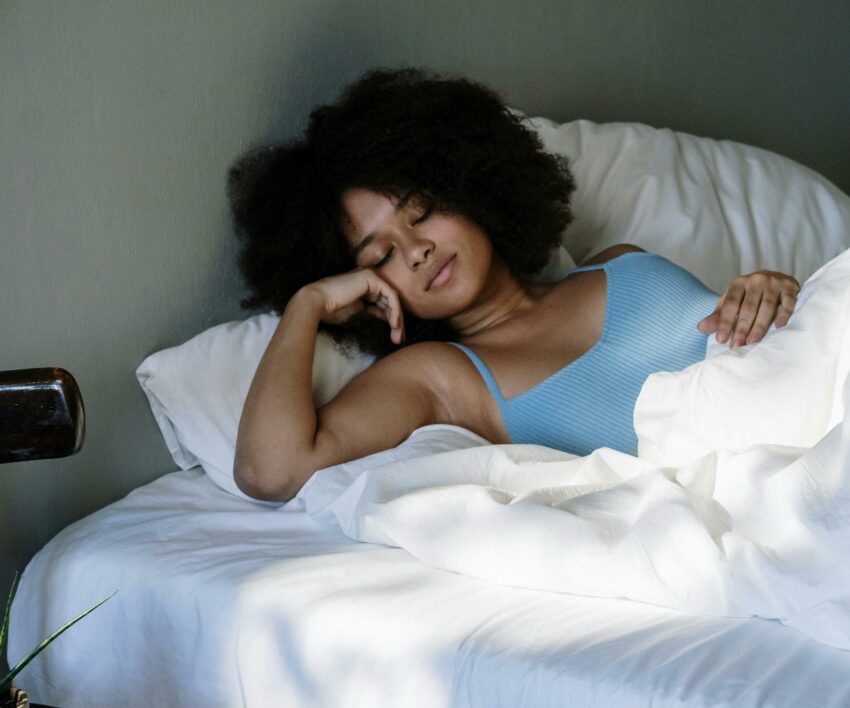
With World Sleep Month underway, fresh national data suggests South Africans may be clocking the recommended hours, but waking up far from refreshed, Cape Town reports.
This follows the release of the 2025 Sloom National Sleep Census, which was published under embargo on 1 March 2026 to align with World Sleep Awareness Month (1–31 March) and World Sleep Day on 13 March. The findings illustrate South Africa experiencing what researchers term a ‘sleep paradox.’ The hours are there. The recovery, it seems, is not.
At the centre of the findings is the newly launched South Africa Sleep Quality Score (SSQS), which is the country’s first composite benchmark measuring restorative sleep. The national average sits at 54 out of 100, based on responses from 5,602 people across all nine provinces.
Also see: Cognitive shuffling, a sleeping hack for over-thinkers
The sleep paradox
On paper, the statistics look promising, as more than half of respondents, 57.6%, report sleeping the recommended 7 to 9 hours a night.
However, a closer examination reveals a different reality, as only 15.1% of respondents report waking up feeling genuinely refreshed. Furthermore, one in six individuals admits to waking up feeling drained.
‘While more than half of adults sleep enough hours, only 15% wake up truly rested,’ says Rudo Kemp, Founder and CEO of Sloom.
That disconnect between duration and quality is what researchers have flagged as the country’s growing sleep paradox.
When participants were asked what keeps them from a good night’s rest, the answer was less about late-night scrolling and more about physical strain.
Also see: This is why experts encourage sleeping naked
The census also assessed what Sloom refers to as the ‘mattress age penalty.’ Participants who slept on mattresses less than a year old had an average SSQS of 60.5, while those with mattresses over 20 years old scored only 48.1, resulting in a gap of 12.4 points.
Comfort plays a crucial role in decisions as well. An impressive 86.7% of individuals consider comfort to be their highest priority when selecting a mattress, with price (59.7%) and warranty or trial periods (37.6%) following closely behind.
The findings draw a straight line between physical support and restorative rest.
Beyond physical discomfort, stress is proving to be another major disruptor, as nearly half of respondents, 49.8%, say stress keeps them awake at night.
Middle-aged South Africans appear to be feeling it most. Individuals aged 46 to 55 reported the lowest average sleep score, which was 52.4 out of 100.
Unemployed participants had even poorer scores, averaging 49.6, highlighting the link between financial distress and sleep disturbances.
Provincially, average SSQS scores were closely clustered among major hubs: Gauteng at 54.7, KwaZulu-Natal at 53.4, and the Western Cape at 53.1.
A score beyond hours
To move the conversation beyond simply counting hours, Sloom developed the Sleep Score Index, a 0 to 100 measure built on five weighted pillars: sleep duration, night wakings, morning restedness, mattress comfort, and routine consistency.
‘We developed the Sleep Quality Score to give South Africans a clear snapshot of the sleep challenges we face as a nation,’ says Kemp.
‘My hope is that we can raise awareness and help South Africans make informed, actionable changes to improve the quality of their rest.’
She adds: ‘This data shows that the issue isn’t just sleep duration, it’s discomfort, disruption, and a lack of true restoration. If we can improve even one of those areas, we can begin to shift sleep from something we simply get through, to something that genuinely restores us.’
Also see: Does sleeping a lot help you live longer?
Compiled by Lulama Klassen
First published on Cape Town etc
Be the first to know – Join our WhatsApp Channel for content worth tapping into! Click here to join!