
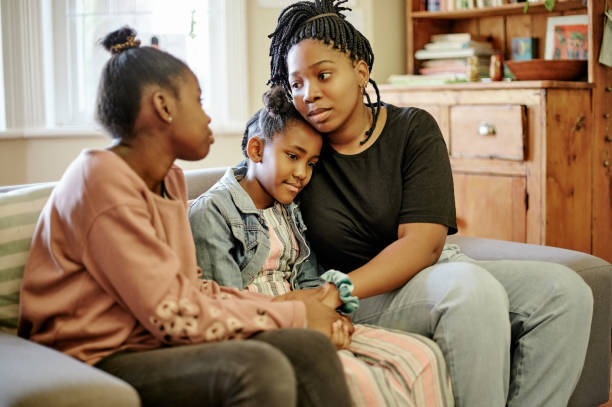
In many families, there is one person everyone turns to first.
The one who keeps calm in a crisis. The one who sorts out the admin, sends the money, makes the call, smooths over the argument, remembers the birthday, checks on the auntie, and somehow still shows up smiling. In some homes, that person is the eldest daughter. In others, it is the son who became “man of the house” too early. Sometimes it is simply the family member who seemed the most capable, so more and more weight kept landing on their shoulders.
From the outside, this person often looks admirable. Dependable. Grounded. Strong.
But inside, the story can be very different.
When strength becomes a role, not a choice
Being the “strong one” is often treated like a compliment. In reality, it can become a role people are pushed into by survival, family history, money stress, grief, or years of feeling like there was no room to fall apart.
That is where the emotional cost begins.
Instead of asking what they need, the strong one learns to keep going. They become the fixer, the peacemaker, the backup plan, and the emotional shock absorber. Over time, that constant over-functioning can turn into chronic exhaustion, hidden anxiety, and a deep sense of loneliness.
It is a strange kind of isolation. You are surrounded by people who need you, yet very few stop to ask whether you are okay.
The quiet burnout nobody sees
Burnout does not always look dramatic. Sometimes it looks like snapping over something small because you have carried too much for too long. Sometimes it is crying in the shower, forgetting simple things, feeling permanently tired, or lying in bed unable to switch off because your mind is already preparing for the next emergency.
For many people, the body starts speaking before they do. Headaches, muscle tension, poor sleep, irritability, and a feeling of always being “on” can all signal that the nervous system is under strain.
This is one reason the strong ones can seem fine for months, even years, until one day they are simply not.
Why asking for help feels so hard
One of the cruellest parts of this role is that the person carrying everyone else often struggles most to say, “I need help.”
That is not stubbornness. It is often conditioning.
If you grew up in a family where vulnerability felt unsafe, inconvenient, or likely to make things worse, you may have learned that competence was your protection. Hold it together. Be useful. Do not add to the problem. Do not break down. Do not burden anyone.
Eventually, strength can start to feel like a cage.
You may know you are drowning, yet still feel guilty for resting. You may resent others for relying on you but feel terrified of what will happen if you stop stepping in. You may even forget what you want outside of being needed.
The South African layer: duty, family, and silence
In South Africa, this hits differently because family responsibility is rarely a small thing.
Many people are not only carrying immediate relatives but also siblings, cousins, grandparents, or the wider household. In close-knit families, there can be enormous pressure to keep the peace, be respectful, and put the group first. Add in financial stress, job uncertainty, rising living costs, and the expectation to always “push through,” and the burden can become emotionally expensive very quickly.
There is also the social side of it. In many communities, being dependable is praised, but emotional honesty is still uncomfortable. People will applaud how much you do, while missing how much it is costing you.
That is why so many strong ones end up suffering in silence. They are not only carrying the family. They are also carrying the image of being the one who never falls apart.
Signs the role is taking a toll
Sometimes the warning signs are subtle. Sometimes they are loud. Either way, they matter.
You might be carrying too much if you constantly feel tired, irritable, or emotionally numb. You may find yourself fantasising about disappearing for a week just to hear your own thoughts. You may struggle to receive kindness, downplay your pain, or feel deeply uncomfortable when someone offers to help.
Resentment can also creep in. So can guilt. One makes you angry that nobody notices your load. The other makes you feel bad for even thinking that.
That emotional tug-of-war is exhausting.
Redefining what strength really means
There is a harmful idea that strength means coping quietly, sacrificing endlessly and never needing support. It sounds noble, but it is not sustainable.
Real strength is not self-abandonment.
Real strength can look like saying no. It can look like not fixing every crisis. It can look like admitting that you are tired, handing something over, making an appointment with a therapist, or telling someone you trust that you are not coping as well as you seem.
That does not make you weak. It makes you honest.
And honesty is often where healing begins.
Small ways to step out of the role
Nobody rewrites a family pattern overnight. But the shift can start small.
Pause before saying yes. Let one thing wait. Share one true sentence with someone safe. Stop apologising for needing rest. Notice where your body is carrying stress. Ask yourself a simple question you may not have asked in years: What do I need right now?
You do not have to become a different person. You just have to stop believing your worth depends on how much you can carry.
Because the truth is this: the strong one also deserves softness. The one everyone leans on also needs somewhere to land.
And in 2026, with so many South Africans already stretched by life, money, responsibility, and expectation, that reminder feels more urgent than ever.
If this story hits close to home, it may be a sign that you have been surviving for too long in a role that was never meant to cost you your peace.
Need support?
If you are feeling overwhelmed, anxious, emotionally exhausted, or stuck, it may help to speak to a mental health professional. In South Africa, organisations such as SADAG and the South African Federation for Mental Health offer mental health information and support pathways. Reaching out is not a failure. It is often the bravest move the strong one can make.
Featured Image: iStock
Be the first to know – Join our WhatsApp channel for content worth tapping into. Click here to join!