Beginner-Friendly Makeup Tips for Dark Skin That Actually Make a Difference
Learning makeup on dark skin can feel frustrating at first.
You buy a foundation that looks perfect in the bottle, only for it to turn grey on your face. You try a “nude” lipstick that suddenly makes you look washed out. And don’t even get started on powders that leave flashback in every photo.
A lot of women with deeper skin tones grow up feeling like makeup wasn’t really designed with them in mind. Shade ranges were limited for years, tutorials rarely matched darker complexions, and many beauty products simply weren’t formulated properly for melanin-rich skin.
But things are changing and thankfully, makeup for dark skin has become far more inclusive, creative, and beginner-friendly than it used to be.
The biggest thing to understand? Dark skin isn’t difficult to work with. It just needs the right tones, textures, and techniques.
1. Start With Skincare Before Makeup
This is the mistake almost every beginner makes.
Good makeup starts with good skin prep. Dry or dehydrated skin causes foundation to cling to patches, separate, or look dull — especially on deeper complexions where ashiness becomes more noticeable.
A simple routine makes a huge difference:
- Gentle cleanser
- Moisturiser
- SPF during the day
- Lip balm before makeup
Hydrated skin gives makeup that soft, glowing finish everyone wants.
And yes — dark skin still needs sunscreen. Hyperpigmentation can worsen without it.
2. Your Undertone Matters More Than You Think
One of the biggest beginner makeup mistakes is choosing foundation based only on skin depth instead of undertone.
Dark skin can have:
- Warm/golden undertones
- Cool/red undertones
- Neutral undertones
- Olive undertones
Beauty experts recommend swatching foundation along the jawline and checking it in natural light because store lighting often distorts deeper shades.
If foundation looks:
- grey → wrong undertone
- orange → too warm
- red → too cool
The right shade should almost disappear into your skin.
3. Avoid Ashy Powders at All Costs
If there’s one thing every dark-skinned makeup beginner learns quickly, it’s this: not all translucent powders are your friend.
Traditional pale powders often leave a grey cast or flashback effect in photos. Experts recommend golden-toned or deeper tinted powders instead of overly white formulas.
The goal is setting the makeup — not changing your skin colour.
A light hand also matters. Too much powder can flatten the natural glow of melanin-rich skin.
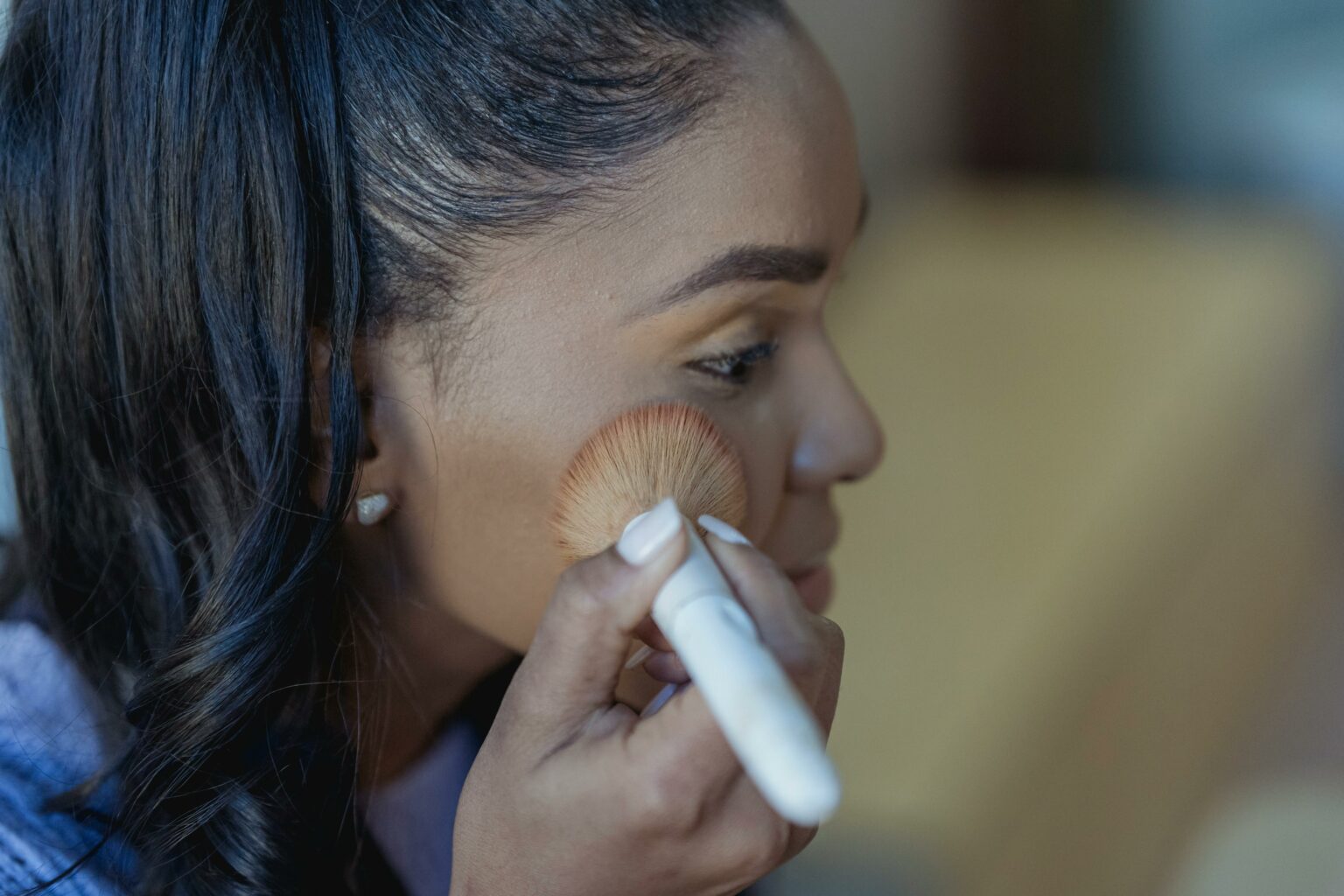
4. Blush Is Not Optional
A lot of beginners skip blush because they think it “won’t show up” on dark skin.
Actually? Blush looks incredible on deeper complexions — you just need richer pigments.
Beauty experts recommend:
- berry tones,
- burnt orange,
- deep coral,
- plum,
- brick red,
- wine shades
because they complement melanin beautifully.
Cream blushes especially tend to melt into dark skin more naturally than powder formulas.
And honestly, blush is often what makes makeup go from “flat” to fresh and alive.
5. Don’t Go Too Light With Concealer
This is probably one of the most common beginner mistakes.
Many people think concealer should be dramatically lighter than foundation, but on dark skin that often creates an unnatural grey or overly bright under-eye effect.
Experts usually recommend going only 1–2 shades lighter for brightening.
For dark circles or hyperpigmentation, orange or peach colour correctors work especially well on deeper skin tones before concealer application.
6. Gold Looks Better Than Silver Most of the Time
One of the easiest ways to make makeup pop on dark skin is understanding colour payoff.
Warm metallics like:
- gold,
- bronze,
- copper,
- rich brown,
- cinnamon,
- terracotta
usually complement deeper skin beautifully.
Silver or icy shades can sometimes look chalky unless applied carefully.
The same goes for highlighter. Warm gold and bronze tones tend to enhance melanin instead of sitting on top of it.
7. Beginner Makeup Doesn’t Need 25 Products
Social media has convinced everyone that makeup requires an entire beauty studio.
It doesn’t.
Even beauty communities online constantly remind beginners that you only need a few essentials to start.
A beginner-friendly makeup kit can honestly be:
- Foundation or skin tint
- Concealer
- Powder
- Blush
- Mascara
- Lip liner
- Lip gloss or lipstick
That’s enough for a beautiful everyday look.
You can always build from there later.
8. Natural Light Will Save You
This sounds simple, but it changes everything.
Applying makeup under harsh yellow lighting often causes over-applying, wrong shade matching, and uneven blending. Makeup artists consistently recommend natural lighting whenever possible.
So before leaving the house:
- check your makeup near a window,
- look at it in daylight,
- and test photos with flash if you’re going out at night.
Your future selfies will thank you.
9. Practice Matters More Than Perfection
Every woman starts somewhere.
Nobody wakes up knowing how to blend contour, match undertones, or apply eyeliner perfectly. Even experienced beauty creators say makeup becomes easier through repetition and experimentation.
And honestly? Some of the best makeup looks on dark skin happen when women stop trying to hide their features and start enhancing them instead.
Melanin already brings depth, warmth, and dimension naturally.
Makeup is just there to highlight it.
Beginner makeup for dark skin doesn’t have to feel intimidating.
Once you understand undertones, avoid ashiness, and focus on enhancing rather than masking your skin, makeup becomes far more fun — and far less stressful.
And the best part? Dark skin carries colour beautifully. Rich blushes, glowing bronzers, warm metallics, glossy lips — they all come alive against melanin in a way that feels effortless once you find your rhythm.
Because makeup shouldn’t make you look like someone else.
It should make you look more like yourself.
Also see: Rachel Kolisi lands in hospital: ‘All is well’
Featured Image: Pexels
Be the first to know – Join our WhatsApp channel for content worth tapping into. Click here to join!