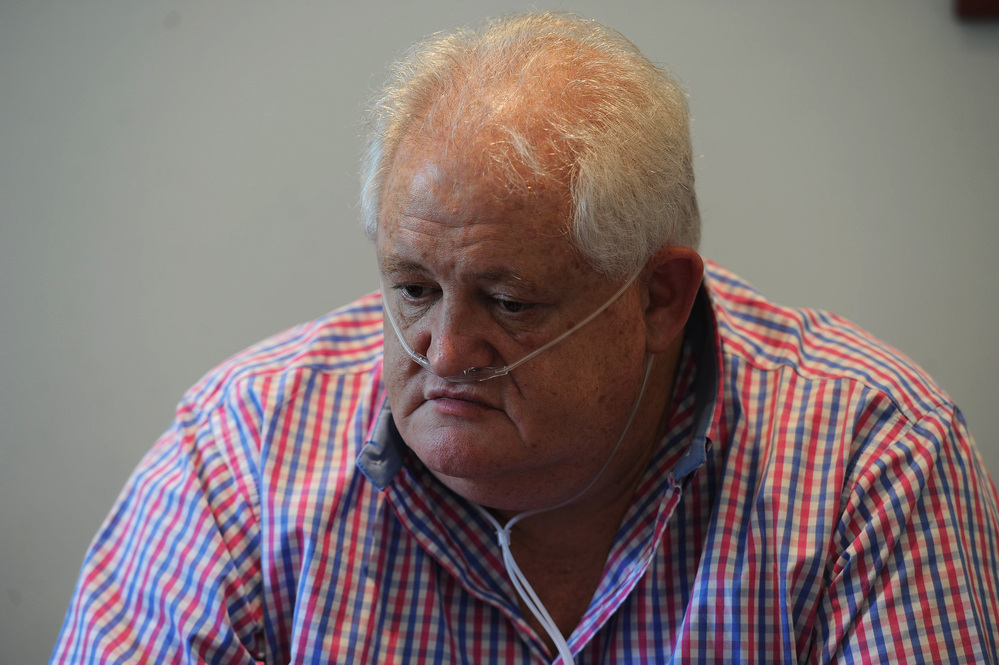
Former Bosasa chief operating officer Angelo Agrizzi has been ordered to pay the state more than R1.66 billion following a Pretoria High Court ruling linked to corruption and money laundering at the company.
Also see: Joe ‘Ferrari’ Sibanyoni denies alleged underworld links at Madlanga Commission
The court ordered Angelo to pay R1,666,582,825.73, together with interest, after a confiscation enquiry brought under the Prevention of Organised Crime Act (POCA).
The ruling, handed down by Judge MJ Mosopa on 29 October 2026, is aimed at recovering financial benefits linked to unlawful activities involving Bosasa.
BREAKING NEWS🚨
Pretoria High Court orders Angelo Agrizzi to pay State R1.66 billion
The Pretoria High Court has ordered former Bosasa chief operating officer Angelo Agrizzi to pay the State R1,666,582,825.73 (more than R1.66 billion), plus interest, following a confiscation enquiry linked to the company’s corruption activities.
Judge MJ Mosopa handed down the order on 29 October 2026 following an application by the National Director of Public Prosecutions (NDPP) under section 18 of the Prevention of Organised Crime Act.
The enquiry was heard on 30 July, with Agrizzi participating virtually from Italy and representing himself.
The order follows Agrizzi’s November 2025 conviction after he entered into a plea and sentence agreement with the Investigating Directorate Against Corruption (IDAC).
He pleaded guilty to three counts of corruption and one count of money laundering linked to Bosasa’s operations. He was sentenced to 10 years’ imprisonment on each count, amounting to 40 years, wholly suspended for five years on condition that he cooperates with ongoing investigations and provides evidence.
In his admissions, Agrizzi acknowledged Bosasa’s corruption network, which involved cash payments and inflated invoices to secure government contracts, particularly with the Department of Correctional Services.
He admitted that approximately R75.7 million in bribes was paid between 2000 and 2016 to secure contracts worth about R2.37 billion. He also admitted to personally helping prepare cash used to bribe government officials.
Mosopa found that Agrizzi benefited from the unlawful activities and acted in common purpose with other Bosasa executives.
The judge also found that Agrizzi had failed to fully disclose his financial affairs and assets, including properties and arrangements involving assets in Italy.
The court rejected his argument that he could not be held liable for the broader proceeds of Bosasa’s criminal activities. It found that his salary, bonuses and other payments formed part of the benefits derived from the corrupt enterprise.
The confiscation order aims to deprive Agrizzi of the financial benefits of his criminal activities rather than impose additional punishment.
He was also ordered to pay the legal costs of the proceedings, including the costs of two counsel.
— MDN NEWS (@MDNnewss) November 2, 2026
Also see: Joe ‘Ferrari’ Sibanyoni set to return to Madlanga Commission
Bosasa corruption scandal
Angelo became a central figure in the State Capture Inquiry after testifying before the Zondo Commission in 2019. During his testimony, he detailed how Bosasa allegedly used bribery and illicit payments to secure lucrative government contracts.
In November 2025, Angelo entered into a plea and sentence agreement with the Investigating Directorate Against Corruption (IDAC). He pleaded guilty to three counts of corruption and one count of money laundering.
He was sentenced to 10 years’ imprisonment on each count, amounting to 40 years, wholly suspended for five years, subject to conditions that included cooperating with investigators and providing evidence in related cases.
According to the High Court judgment, Angelo admitted that approximately R75.7 million in bribes had been paid between 2000 and 2016 to secure government contracts worth more than R2.37 billion.
The judgment also recorded his admission that he personally helped prepare cash bundles used to bribe officials.
Court rejects Angelo Agrizzi’s arguments
During the confiscation proceedings, Angelo opposed the state’s application, arguing that he should not be held personally responsible for the full value of Bosasa’s unlawful activities.
However, Judge Mosopa found that Angelo had participated in the company’s criminal enterprise alongside other executives and benefited from its unlawful activities.
The court also considered his failure to provide full disclosure of his financial affairs. The judgment raised concerns about properties and financial arrangements that had not been properly disclosed, including assets abroad.
The court rejected his arguments and granted the state’s application for the confiscation order.