For some, it is about slow mornings with nothing but birdsong and distant lion calls breaking the silence. For others, it is the thrill of spotting a herd of elephants from a self-drive route, windows down, camera ready. The difference often comes down to one simple decision: private or public.
Both offer meaningful, memorable encounters with the wild. The real question is not which is better, but which feels right for the kind of traveller you are and the experience you want to have.
Also see: Planning a safari? Here’s how to take breathtaking wildlife pictures with your phone
The private safari: curated, immersive, quietly indulgent
Private game reserves operate on a controlled-access model, typically with a limited number of lodges and vehicles. Many are located adjacent to major conservation areas such as Sabi Sands Game Reserve, sharing unfenced borders with larger ecosystems. This allows wildlife to move freely while maintaining a more exclusive visitor experience.
Game drives in private reserves are conducted by qualified guides, often accompanied by trackers. These drives follow a structured schedule, usually twice daily, and are tailored to guest interests where possible. One of the defining features is the ability to drive off-road in certain situations, allowing closer and more sustained wildlife sightings.
Accommodation is typically all-inclusive, covering meals, guided activities, and sometimes additional experiences such as bush walks. As a result, logistics are streamlined, and guests can focus entirely on the safari itself.
This format is best suited to travellers who prioritise:
- Expert interpretation and guided learning
- Consistent, high-quality wildlife sightings
- A fully managed itinerary with minimal planning
- Comfort and integrated hospitality
Private safaris are particularly effective for shorter stays, where time efficiency and depth of experience are important.
Also see: Places you can experience a Safari in WC this Easter Weekend
Public safari: flexible, self-directed, and accessible
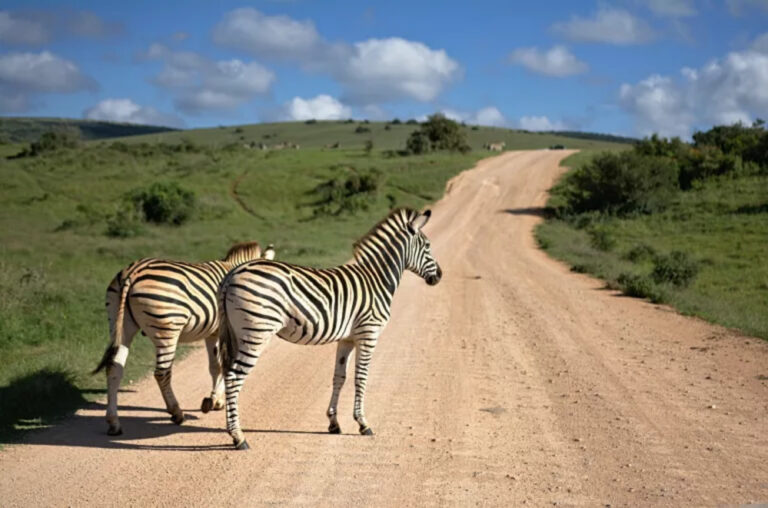
Public national parks are managed by government conservation bodies and are open to a broad range of visitors. Parks such as Kruger National Park, Addo Elephant National Park, and Hluhluwe–Imfolozi Park offer extensive road networks that allow for self-drive safaris.
In this model, visitors are responsible for planning their routes, managing their time, and navigating the park independently. While guided drives are available in many parks, the core experience is built around flexibility and personal exploration.
Accommodation options range from basic campsites to well-equipped rest camps, making this approach significantly more adaptable to different budgets and travel styles.
Public safaris are best suited to travellers who value:
- Independence and control over daily schedules
- The ability to explore at their own pace
- A wider range of accommodation price points
- Longer, more flexible travel itineraries
Wildlife sightings can be equally rewarding, though they may require more patience and self-navigation.
Key considerations when choosing your safari style
Rather than comparing features in isolation, it is more useful to assess how each option aligns with your practical needs and travel behaviour.
- Level of involvement
If you prefer a hands-off experience with expert guidance, a private reserve is the better fit. If you are comfortable navigating, planning routes, and managing your own schedule, a public park offers greater autonomy. - Time available
Private safaris maximise efficiency, making them ideal for shorter trips. Public safaris work well for extended travel, where you can afford to spend more time exploring. - Budget structure
Private reserves typically operate on an all-inclusive pricing model, which simplifies budgeting but comes at a higher upfront cost. Public parks allow for more granular cost control, including self-catering and varied accommodation options. - Type of experience
Private safaris emphasise guided interpretation, close encounters, and a more immersive learning environment. Public safaris prioritise exploration, spontaneity, and personal discovery. - Travel group
Couples or travellers celebrating special occasions often benefit from the exclusivity of private reserves. Families, groups, or repeat safari-goers may find public parks more adaptable and cost-effective.
Can you combine both?
Many travellers choose to integrate both styles into a single itinerary. For example, starting with a few days in a private reserve can provide a strong foundational understanding of wildlife behaviour and tracking. This can then enhance a self-drive experience in a national park, where that knowledge can be applied more independently.
This hybrid approach is particularly effective in regions where private reserves share ecosystems with national parks, allowing for continuity in wildlife viewing.
Quick reference: which safari style suits you?
- Prefer guided expertise and a structured itinerary → Private safari
- Prefer independence and flexible planning → Public safari
- Travelling for a short, high-impact trip → Private safari
- Planning a longer, budget-conscious journey → Public safari
- Want both depth and flexibility → Combine both experiences
First published by Getaway
Compiled by Miriam Kimvangu
Also see: 6 Unique African safaris beyond the traditional game drive
Be the first to know – Join our WhatsApp channel for content worth tapping into. Click here to join!