A new chapter for African women’s football
African women’s football is about to cross an important milestone. On 15 January, the draw for the TotalEnergies CAF Women’s Africa Cup of Nations Morocco 2026 will officially kick off the journey toward continental glory and a place on the world stage.
For the first time in the tournament’s history, 16 nations will be involved. That expansion from 12 teams is more than just a numbers game. It reflects how rapidly the women’s game has grown across the continent, with more countries investing, qualifying, and competing at a higher level.
The finals will be staged in Morocco from 17 March to 3 April, but for many teams, the story truly begins with the draw.
World Cup qualification raises the stakes
This edition of Wafcon carries extra pressure and promise. It doubles as Africa’s qualification pathway to the 2027 Fifa Women’s World Cup.
The target is clear. Reach the semifinals in Morocco and a World Cup ticket is secured.
That reality adds urgency to every group-stage fixture and makes the draw itself a defining moment. A favourable group could ease the road, while a tough pairing may demand near-perfect performances from day one.
African nations have tasted global exposure in recent World Cups, and expectations are no longer modest. Progression is no longer a bonus. It is the standard.
Banyana Banyana carry unfinished business
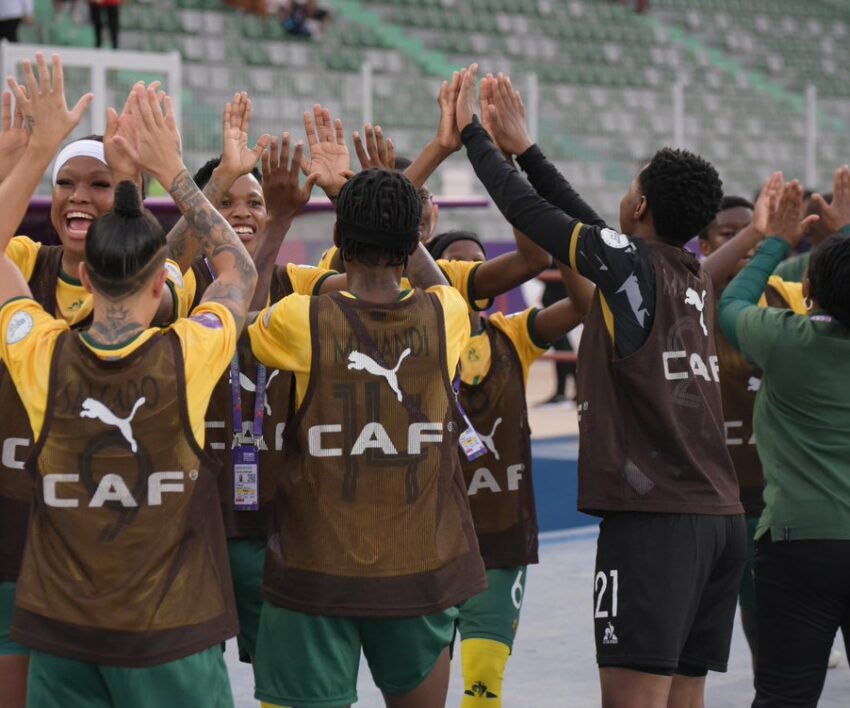
For South African supporters, the draw will be watched with particular interest. Banyana Banyana head to Morocco carrying both confidence and frustration.
At the previous finals in Morocco, South Africa finished fourth, losing the bronze-medal match to Ghana on penalties. It was a narrow miss that still lingers, especially given the momentum built around the squad in recent years.
That strong showing should place South Africa among the seeded teams for the draw, alongside hosts Morocco, Nigeria, and Ghana. It also sets up a clear narrative of redemption. This is a chance not just to compete, but to finish what was started.
Nigeria remain the benchmark
Any conversation about Wafcon still begins with Nigeria.
The Super Falcons arrive as defending champions after lifting a record-extending 10th title at the 2025 edition. Their consistency over decades has made them the measuring stick for the rest of the continent, regardless of how much the competitive gap has narrowed.
For emerging teams, drawing Nigeria early is a challenge. For title hopefuls, it is a statement test.
Cosafa’s growing influence
The presence of South Africa, Zambia, and Malawi highlights how Cosafa continues to shape the women’s game in the region.
Zambia’s rise over the past few years has been one of African football’s standout stories, while Malawi’s qualification reflects steady progress and improved development structures. Together, the trio underline a regional shift where competitiveness is no longer limited to traditional powerhouses.
That growth ensures Cosafa teams will not simply make up the numbers when the tournament begins.
A diverse and competitive field
The full list of qualified teams paints a picture of a continent on the rise. Alongside the seeded nations are Algeria, Burkina Faso, Cameroon, Cape Verde, Ivory Coast, Egypt, Kenya, Mali, Senegal, and Tanzania.
It is a lineup that blends experience with ambition, and one that promises a group phase filled with contrasting styles and narratives.
The road officially begins
When the balls are drawn on 15 January, speculation turns into reality. Paths will be mapped, rivalries set, and expectations sharpened.
For Africa’s women’s teams, this is no longer just about participation. It is about performance, progress, and a genuine belief that continental success can translate onto the global stage.
From that moment on, the race to the semifinals and the World Cup truly begins.
Read More: Siphiwe Tshabalala heads To Mexico for star studded crown legends match
Read more football news and updates on: soccermag and africapicks
Source: SuperSport
Featured Image Source: Basadi Action on X