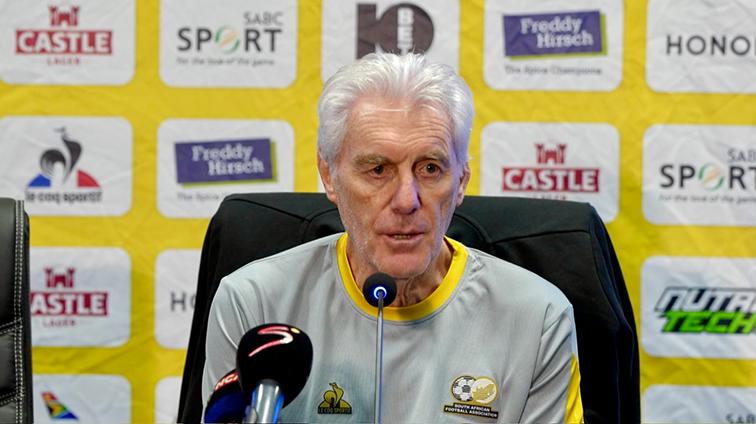
As South Africa looks ahead to the 2026 FIFA World Cup, questions are already being asked about what comes next for Bafana Bafana head coach Hugo Broos.
The Belgian mentor, who turns 74 next month, has previously suggested that the tournament in North America could mark the end of his coaching career. Yet South African Football Association president Danny Jordaan has now hinted that the story might not be finished just yet.
While Broos’ current contract will take him through the global showpiece hosted by the United States, Mexico and Canada, SAFA has not ruled out the possibility of further discussions about his future.
Read more: SAFA And Adidas reveal new South Africa home jersey for 2026
Stability Paying Off For National Teams
Speaking about the progress of South Africa’s national teams, Jordaan credited the recent improvement in results to something that has been rare in local football: stability on the bench.
For years, Bafana Bafana became synonymous with constant coaching changes, with new managers often arriving before their predecessors had time to build a team. According to Jordaan, that pattern has finally shifted.
He explained that Broos has been allowed to complete his contract without interruption, something SAFA believes has played a major role in Bafana’s improved performances over the past few years.
Before Broos took charge in 2021, the national team struggled with consistency and identity. Since then, the Belgian has gradually rebuilt the squad, introducing younger players while restoring belief in the national setup.
Read more: Standard Bank’s New Deal Gives SAFA And National Teams A Lifeline
A Conversation Still To Be Had
Despite Broos previously indicating that he intends to retire after the World Cup, Jordaan insists the final decision has not yet been made.
SAFA plans to sit down with the veteran coach to discuss what happens once the tournament concludes.
By that point, Broos will have spent five years in charge of Bafana Bafana, a lengthy tenure by South African football standards. His experience, combined with the progress made under his leadership, means the association is reluctant to close the door prematurely.
Whether Broos ultimately chooses to continue or step away remains uncertain. But SAFA’s message is clear: if the coach is willing to stay, the conversation is far from over.
Lessons From The Past
Jordaan also pointed to the importance of long-term coaching appointments in building successful teams. He highlighted the example of Banyana Banyana head coach Desiree Ellis, who has been in the role for a decade.
Under Ellis, the women’s national team has enjoyed one of its most successful periods, including winning the Women’s Africa Cup of Nations and becoming a consistent force on the continent.
According to SAFA, this kind of continuity allows coaches to properly assess talent, develop players and shape a team’s identity.
In contrast, South African football has historically been quick to dismiss coaches when results dip. Jordaan noted that over an 11-year period, the national team went through as many as 21 different coaches.
That constant turnover, he suggested, prevented any real long-term progress.
Focus On The Road To 2026
For now, Broos remains firmly focused on preparing Bafana Bafana for the challenges ahead, with the 2026 FIFA World Cup representing the ultimate target.
The tournament, which will be staged across three host countries for the first time, will be the biggest World Cup in history. For South Africa, it offers a chance to re-establish itself on the global football stage.
Whether Broos will still be in charge once the tournament ends remains an open question.
What is clear, however, is that SAFA values the stability he has brought to the national team and is willing to keep the door open a little longer.
Read more: Why Bafana chose Pachuca as their World Cup home”
Source: SABC Sport
Featured Image: SABC Sport on X