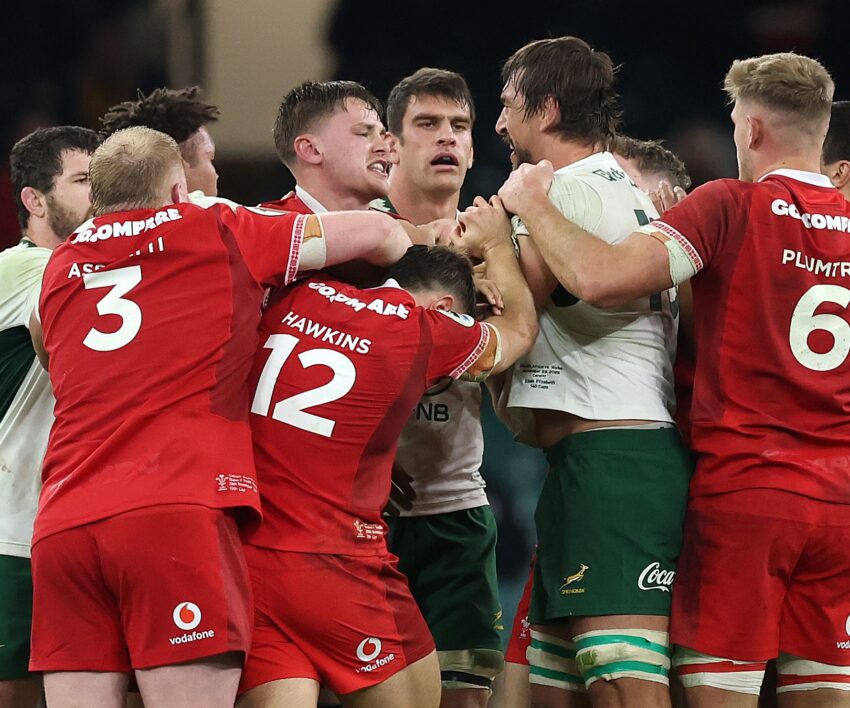
Eben Etzebeth has finally broken his silence this week regarding the incident that shocked the rugby community. The Springbok lock publicly responded to his 12 match ban following an eye gouge incident in Cardiff. The disciplinary ruling means the two time World Cup winner will be sidelined until April, but in a lengthy Instagram statement, Etzebeth insisted the controversial moment was not deliberate.
His explanation arrives after weeks of heated debate across rugby circles, with many Welsh supporters calling for a harsher sanction while South Africans defended one of the game’s most respected enforcers. The incident itself came during the Boks’ massive 73 0 victory over Wales, a match remembered as much for the scoreline as for the slow motion clips that later dominated social media.
Etzebeth Says The Eye Contact Was Accidental
Etzebeth’s message struck a tone that felt unusually vulnerable for a player known for his intimidating on field presence. He acknowledged wrongdoing, apologised to supporters, and emphasised that he did not want young players to think foul play is acceptable.
But he also explained what he believes led to the accidental contact.
According to Etzebeth, the scuffle began when Wales flanker Alex Mann struck him with an open hand to the chin and neck area. He claims he waited for a reaction from the assistant referee, then moved in with a mirrored open handed action.
From Etzebeth’s perspective, the chaos around him changed everything. He says two Welsh players collided into the scuffle at the same moment and one of his teammates pulled Mann by the neck, shifting Mann’s body into the path of Etzebeth’s hand.
That sudden movement, he insists, caused the hand to graze Mann’s face in a way that appeared far worse in slow motion than it did in real time.
A Ban That Split Opinion
The 12 match suspension did little to calm reactions.
Some northern hemisphere pundits argued the ban was too lenient. Others, including several former players, praised Etzebeth for owning up to his mistake and giving the public a clearer picture of how such moments unfold in the physical chaos of Test rugby.
In South Africa, fans flooded his comments section with messages of support. Many referenced his clean disciplinary record, noting that this was his first red card in a career spanning more than a decade.
Local supporters also highlighted how rare it is for a high profile player to break down an incident this transparently, especially one surrounded by so much emotional noise.
A Reputation At Stake And A Lesson For Younger Players
Etzebeth’s statement also touched on legacy. At 34, he is one of the most decorated forwards in Springbok history, and the idea of being associated with intentional gouging clearly weighed on him.
He reminded followers that he understands the seriousness of such an act, adding that he hopes this will be his last disciplinary setback of this magnitude.
For many South Africans, his apology reinforced why he remains such a respected figure: tough, unapologetically physical, but fiercely protective of rugby’s values.
Looking Ahead
With the ban keeping him off the field until April, Etzebeth now faces an unexpected stretch away from the game. The Springboks will feel his absence, but the conversation he has sparked may have an even longer lasting impact.
In a sport that thrives on intensity, Etzebeth’s message is a reminder that even the hardest competitors carry the weight of their actions long after the whistle blows.
And for fans, both in South Africa and abroad, it offers a rare glimpse into the split second collisions and miscalculations that can shape a player’s reputation in an instant.
Source: SuperSport
Featured Image Source: Kickoff Magazine on X
Read more rugby news and updates on SA Rugby Mag and africapicks
Listen to the Keo & Zels rugby podcast