“He doesn’t have the capacity”: Opposition fires back after Ramaphosa’s SONA
The applause had barely faded in Parliament when the counterattack began.
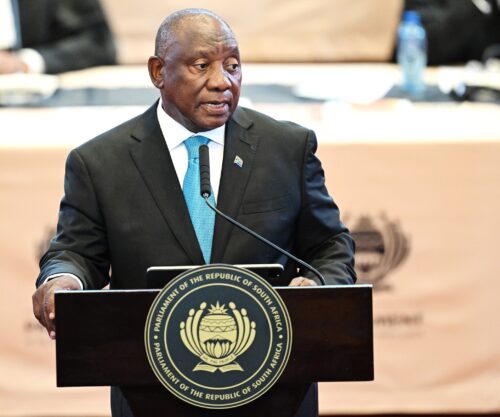
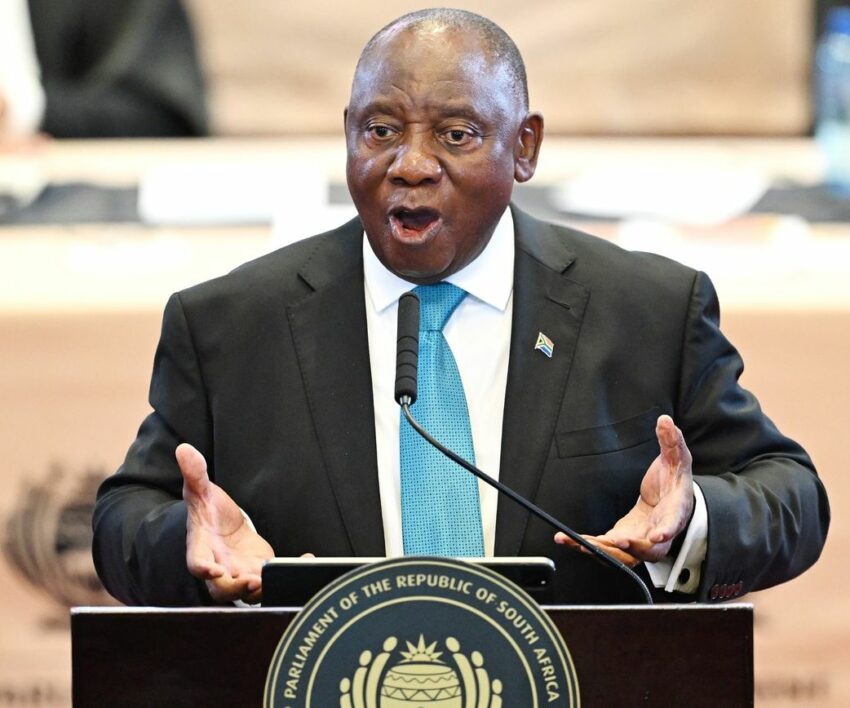
Within minutes of Cyril Ramaphosa concluding his 2026 State of the Nation Address in Cape Town, opposition leaders lined up to deliver their verdict: promising words, yes, but where is the proof?
With elections looming, every sentence in the president’s speech was measured not just for policy, but for political intent.
Malema: “We’ve heard this before”
Economic Freedom Fighters leader Julius Malema didn’t mince his words.
Speaking outside Parliament, Malema accused Ramaphosa of recycling old commitments. Apart from welcoming the deployment of the South African National Defence Force to gang-affected areas, he said little in the speech felt new.
“The difference,” Malema remarked pointedly, “is that this time he’s saying it with energy.”
Malema also took aim at the president’s reliance on task teams particularly those announced to tackle foot-and-mouth disease and to restructure Eskom. In his view, task teams are often a sign of deflection rather than decisive leadership.
For the EFF, the underlying critique is simple: announcing structures is not the same as delivering results.
Read More: Lesufi’s hotel shower comment sparks outrage amid Gauteng water shortages
Rise Mzansi: Wait for the Budget
Rise Mzansi leader Songezo Zibi struck a more measured tone, but his message was equally firm.
He said the speech contained no surprises and warned that promises must be matched by funding. In past years, he noted, bold SONA commitments have not always been reflected in the national Budget.
For Zibi, the real test is alignment. Without financial backing, he argued, pledges remain political theatre.
His stance reflects a broader public mood: optimism tempered by experience.
ActionSA: “Who broke local government?”
In the Eastern Cape, ActionSA provincial chairperson Athol Trollip offered a mixed review.
He described the address as more candid than expected, particularly regarding the state of local government. Ramaphosa acknowledged that many municipalities are broken something communities have felt for years.
But Trollip argued the president failed to accept responsibility.
“It’s his government that has broken local government,” he said, pointing out that decades of governance cannot be separated from the current administration.
Trollip also questioned the timing of renewed focus on water infrastructure. Rivers like the Vaal may be full, he noted, but taps remain dry in many communities a sharp reminder that infrastructure collapse is often about management, not scarcity.
Read More: SONA 2026: Seven moments that could reshape South Africa’s future
DA: “Solid, now deliver”
Democratic Alliance leader John Steenhuisen offered perhaps the most positive opposition response.
He described the speech as solid and more grounded than previous addresses, praising its directness.
Steenhuisen, speaking both as DA leader and Minister of Agriculture, highlighted plans to tackle foot-and-mouth disease. Government is procuring millions of vaccines from international suppliers in Argentina, Türkiye and Botswana, alongside locally produced doses.
The first million vaccines are expected within days, with rollout set to involve private veterinarians and animal health technicians. The goal: vaccinate 80% of targeted herds by year-end and reduce incidents by 70%.
For Steenhuisen, implementation not rhetoric will define success.
SANDF deployment: Weeks away
United Democratic Movement leader and Deputy Defence Minister Bantu Holomisa confirmed that the SANDF deployment to gang-affected areas could begin within two weeks.
He urged communities to cooperate with soldiers and avoid confrontation, emphasising that the military’s role will be to support police operations.
Given the rise of organised crime and gang violence in certain provinces, the move has drawn both relief and concern. While some residents welcome visible security presence, others worry about the militarisation of civilian spaces.
Election-year tension beneath the surface
Beyond policy details, there was an unmistakable political undercurrent.
Malema accused Ramaphosa of using a government platform to campaign in an election year. That criticism echoes a long-standing debate in South African politics: where does governance end and campaigning begin?
On social media, reactions were predictably divided. Supporters praised the speech’s focus on infrastructure and crime. Critics labelled it another cycle of promises. Memes about “task teams” trended briefly on X, reflecting public fatigue with bureaucratic solutions.
Words versus delivery
If there’s a common thread across opposition responses, it’s this: deliver.
Whether sceptical, cautiously optimistic or openly critical, leaders across party lines agree that South Africans are no longer persuaded by announcements alone.
They want visible change functioning municipalities, flowing water, safer streets, growing jobs.
Ramaphosa has laid out his vision. The opposition has drawn its battle lines.
Now, as the Budget approaches and elections near, the country moves from speech-making to scrutiny.
And in 2026, scrutiny may be the most powerful force in South African politics.
Source: Joburg ETC
Featured Image: X{@bruceybld}