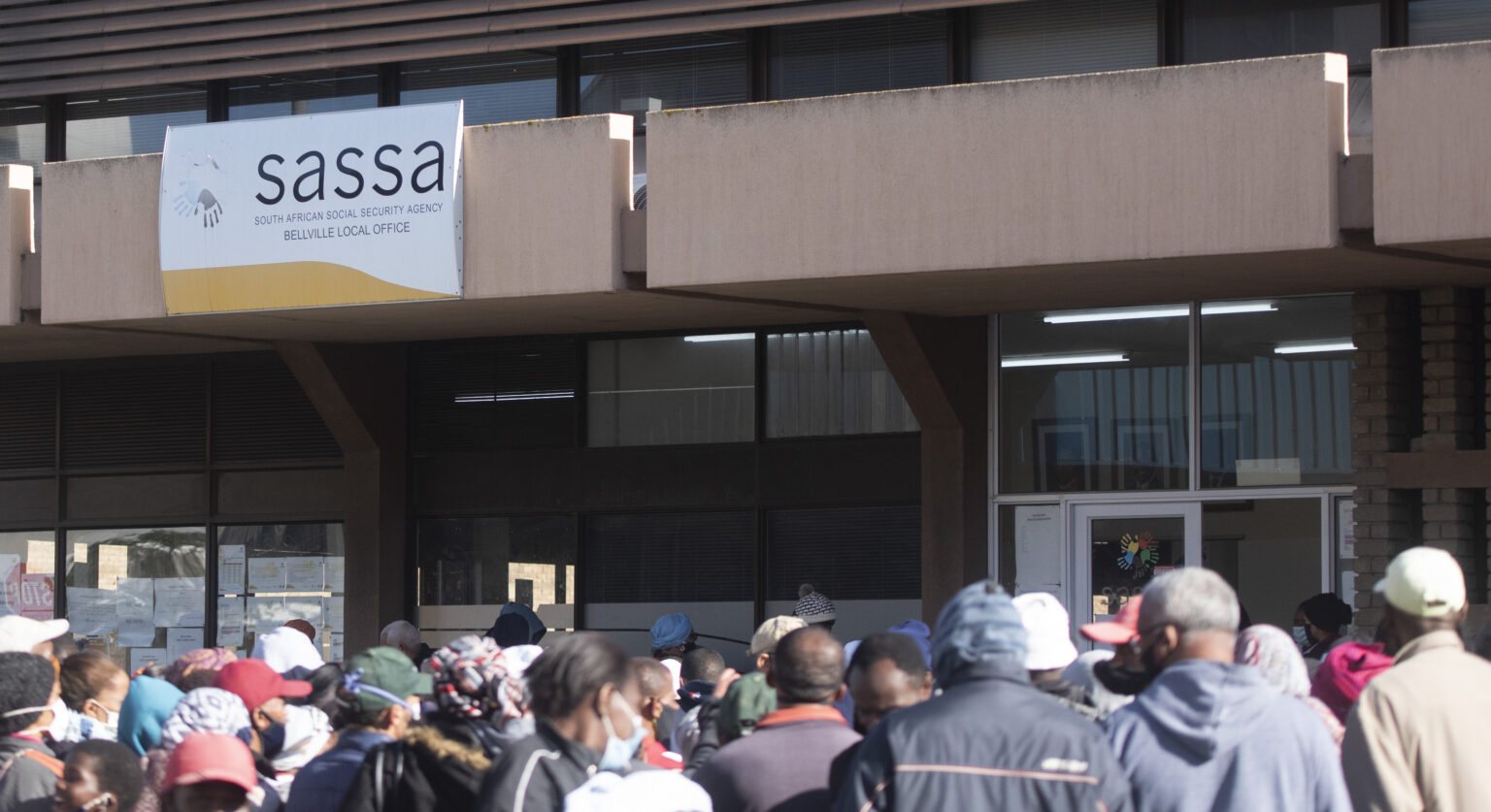
Claims of over three million refugees and asylum seekers applying for South Africa’s R370 Social Relief of Distress (SRD) grant have sent social media into an uproar.
Also see: DURBAN REFUGEES FEAR MORE VIOLENCE IN MARCH AND MARCH ‘CLEAN-UP’
Offered through the South African Social Security Agency (SASSA), the grant provides temporary assistance to vulnerable individuals without financial support, bringing renewed focus to state welfare resources and legal protections.
Surge in social relief applications
The alleged scale of incoming submissions represents an unprecedented operational shift for SASSA and the Department of Social Development.
While the Department of Home Affairs have not confirmed these claims, public outcry still continues within the poorly managed economy.
Grounded in landmark Constitutional Court rulings and legal frameworks established under the Social Assistance Act, eligibility for emergency relief explicitly extends to legally documented refugees, valid Section 22 asylum seekers, and holders of special dispensation permits.
The alleged influx of over three million applications underscores the deep economic hardship experienced by displaced communities living within South Africa’s borders, where access to formal credit, employment, and traditional financial safety nets remains severely restricted.
BREAKING NEWS: Over 3 million applications have been submitted to the Department of Social Development for the SASSA grant by refugees and asylum seekers. https://t.co/4RjFNnJxS0
— #PutSouthAfricansfirst (@Patriot_S_A) October 6, 2026
The alleged rapid growth in applicant numbers also reflects the expanding reach of the state’s digital social assistance framework.
Administrative and eligibility frameworks
To evaluate and verify incoming requests, SASSA relies on an automated electronic system linked directly to Department of Home Affairs databases. To qualify for the R370 disbursement, applicants must be between 18 and 60, reside legally in South Africa, and possess valid permit documentation.
The verification system routinely cross-checks applicant records against banking institutions, the Unemployment Insurance Fund (UIF), the National Student Financial Aid Scheme (NSFAS), and South African Revenue Service (SARS) records to confirm that applicants have no alternative source of income or state assistance.
Once an application is approved, disbursements are processed through digital banking channels, mobile money transfers, or automated lookup payment IDs redeemable at major participating retail partners, including Pick ‘n Pay and Checkers.
Also see: SOUTH AFRICANS OPPOSE RESUMED ASYLUM APPLICATIONS AFTER COURT RULING
Public debate and fiscal policy
The alleged milestone of three million applications has reignited widespread national debate surrounding fiscal sustainability, welfare management, and state spending priorities.
And it’s the opposite. Almost 200,000 beneficiaries have been cancelled by SASSA…
— Zeê (@Starr_Durst) October 7, 2026
Civic groups, labour unions, and social movements operating across public platforms have highlighted the figures to raise concerns over budget allocations, arguing that state resources are stretched thin amid high national unemployment and persistent domestic poverty.
Conversely, legal scholars, social policy experts, and human rights advocates emphasise that extending social assistance to documented asylum seekers and refugees is a fundamental legal obligation rooted in human dignity and equal protection under the law.
As parliamentary oversight committees and civil society organisations monitor the distribution pipeline, the Department of Social Development continues to refine its verification mechanisms to balance constitutional compliance with strict fiscal accountability.
Also see: DURBAN REFUGEE CAMP CLEARED AS ASYLUM SEEKERS RELOCATED TO LINDELA
Be the first to know – Join our WhatsApp channel for content worth tapping into. Click here to join!