
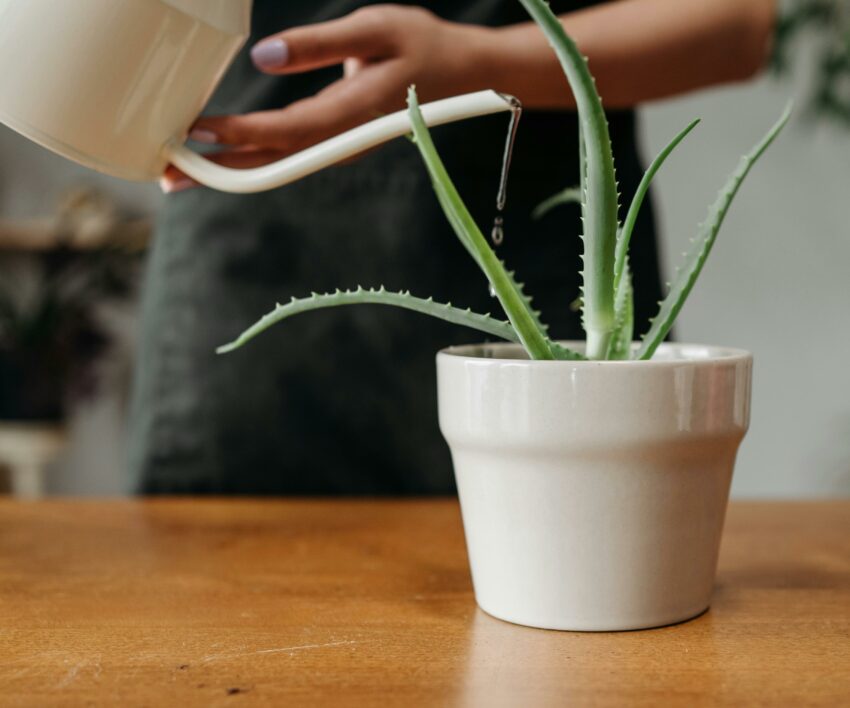
Aloe vera plants have a reputation for being almost indestructible. The plants cope with missed waterings, shrug off heat and still look good on a sunny windowsill. So when it starts drooping, browning or turning mushy, it can feel confusing – and a little discouraging.
Here’s how to spot what’s going wrong and gently guide your plant back to good health.
1. Not watering enough
On the flip side, an aloe that’s been ignored for too long will show dry, shrivelled leaves, often starting at the base.
Fix it: Give the plant a deep drink and check it more regularly, especially during warmer months. While aloe prefers dry conditions, it still needs water now and then to stay plump and healthy.
2. Watering too often
This is the most common mistake. Aloe stores moisture in its thick leaves, which means soggy soil can quickly lead to rot. If the leaves feel soft or look swollen, the roots are likely sitting in water.
Fix it: Let the soil dry out completely before watering again. When you water, soak the soil well, then allow excess moisture to drain away. Never leave the pot standing in water.
3. The lighting isn’t right
Aloe loves light but doesn’t enjoy harsh, direct sun all day. Too little light can cause weak, floppy leaves, while too much can bleach or scorch them.
Fix it: Place your aloe in bright, indirect light. A sunny indoor spot near a window or a sheltered outdoor area with morning sun works well. If leaves look pale or reddish, move them somewhere gentler.
4. Old leaves are dragging it down
Brown or dried-up leaves around the bottom of the plant aren’t always a sign of trouble. Aloe sheds its oldest growth as it matures.
Fix it: Trim away dead leaves using clean scissors or secateurs. This keeps the plant tidy and allows it to focus energy on fresh growth.
5. The pot is overcrowded
Aloe vera produces pups – small baby plants that grow around the base. Over time, these can fill the pot and compete for space and nutrients.
Fix it: Remove the plant from its pot and gently separate the pups from the main plant. Each one with roots can be planted into its own container with fresh soil. This gives the original plant room to breathe and grow.
6. The roots are rotting
Yellowing leaves, drooping growth and a sour smell from the soil can point to root rot. This usually happens after prolonged overwatering.
Fix it: Take the plant out of its pot and inspect the roots. Trim away any dark or mushy sections. Repot the aloe in clean, dry soil and wait a few days before watering again.
7. You’re feeding it when it’s stressed
When a plant is struggling, fertiliser can do more harm than good. Aloe doesn’t need much feeding to begin with.
Fix it: Skip fertiliser until the plant has recovered. If you do feed later on, use a mild, organic option and only during active growth in spring or summer.

Compiled by Maegan-Leigh Jacobs
First published on Garden and Home
Also see: Best houseplants for beginners: easy, low-maintenance picks
Feature Image: Gettys