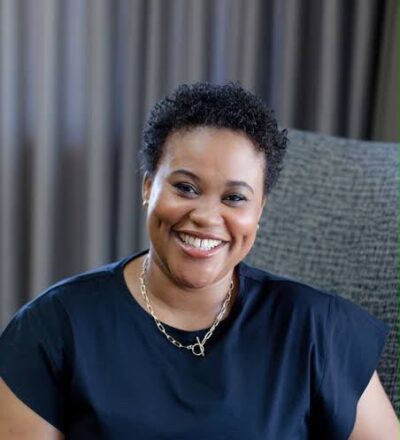
Shaka Sisulu has received his Doctor of Philosophy in International Business from the Gordon Institute of Business Science (GIBS), the business school of the University of Pretoria.
His research examines how business elites across Africa operate within — and actively shape — the political and institutional environments around them.
Also see: Amina Jack graduates again in inspiring academic journey
The thesis, “The Rules of the Game: Business Elite Behaviour in Limited Access Orders,” finds that local business is far more than an economic actor. When local elites coordinate effectively, they contribute to the strengthening of national institutions — including, where conditions allow, democratic ones. The research confirms and extends the foundational work of Nobel laureate Douglass North and his colleagues John Wallis and Barry Weingast, showing that elite behaviour is not simply about protecting privilege, but about the active, often cooperative work of building the environments in which commerce and governance can both function.
Four very different countries. 49 honest conversations
To test whether these findings held across different types of African societies, Sisulu chose four countries representing four very different political realities: the Democratic Republic of Congo, Eswatini, Côte d’Ivoire, and South Africa. Together they cover the full range — from fragile and authoritarian states to more competitive and open ones.
Also see: New achievement: Lerato Mvelase graduates with MBA
In each country, he sat down with senior business leaders — the kind of people who are not easy to reach and even harder to get talking honestly. Forty-nine of them agreed. A consistent thread ran through all four contexts: where local elites were able to coordinate around shared interests, national institutions tended to be more stable and more functional. The findings carry a clear message for policy and for business — investing in the local private sector is not separate from building better governance. In many cases, it is the same thing.
“Local business coordination is not just good for commerce. This research shows it is one of the building blocks of national development — and, where the conditions exist, of democracy itself.”
Taking the research into the classroom
The findings do not stop at the thesis. From 28 to 30 July 2026, Shaka Sisulu and Professor Albert Wocke will co-lecture a new MBA elective at GIBS entitled “The Inner Circle: Politics, Elites and Business in Africa.” The course is designed for MBA students who want to understand not just how African markets work in theory, but how power actually operates in practice — and what that means for anyone trying to do business on the continent.
The two are also collaborating on a series of articles that will bring the research findings to a broader audience. Together, the course and the articles represent a deliberate effort to move the insights from the academy into the hands of practitioners, executives, and policymakers who can put them to use.
About Dr Shaka Sisulu
Dr Shaka Sisulu is a grandson of Walter and Albertina Sisulu, and a faculty member of the Wharton School’s Global Modular Course in South Africa. Dr Sisulu is an Archbishop Tutu Leadership Fellow, a former activist and broadcaster. A businessman whose interests span mining, infrastructure, hospitality and media, Dr Sisulu chairs Retroviral, one of South Africa’s most decorated independent ad agencies.
Also see: Somizi Mhlongo Graduates from Fashion School: ‘I Am Super Proud’
Be the first to know – Join our WhatsApp channel for content worth tapping into. Click here to join!