
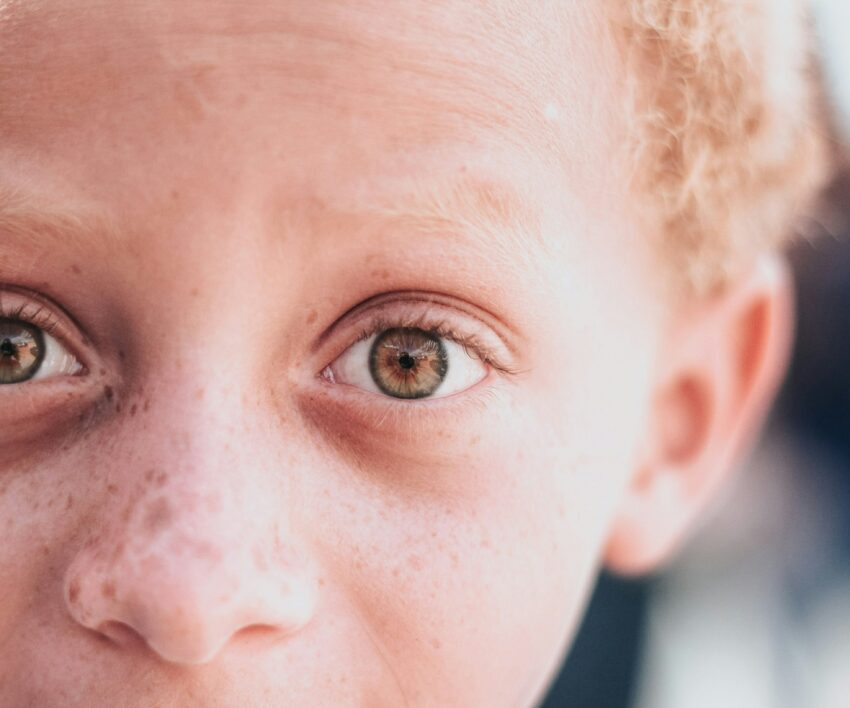
Albinism is a rare, inherited genetic condition that affects the body’s production of melanin, the pigment responsible for the colour of the skin, hair, and eyes. Children living with albinism are born with reduced or no melanin, making them more sensitive to sunlight and often causing vision problems.
Albinism occurs in people of all ethnic backgrounds and affects both boys and girls equally. With proper care, support, and understanding, children living with albinism can lead healthy, fulfilling, and successful lives.
Also see: Daily habits that help you feel stronger, calmer, and healthier
Understanding albinism
Albinism is not contagious and cannot be spread from one person to another. It is inherited when a child receives specific gene changes from both parents. The condition varies from person to person, with some individuals having very light skin and hair while others may have slightly more pigmentation.
Most children with albinism experience visual impairment because melanin plays an important role in the development of the eyes.
Dr Clare Kennedy, an ophthalmologist from Mediclinic Cape Town, says, “Albinism affects the way the world is seen, not the worth of the person seeing it.”
Dr Kennedy continues to say there are various types of albinism, but the two most common forms are Oculocutaneous Albinism (OCA) and Ocular Albinism (OA).
Also see: Healthy comfort foods to enjoy during winter
Essential ways to care for a child living with albinism
Every child and young person should live in a supportive, protective and caring environment that promotes their full potential. Children with inadequate or no parental care are at special risk of being denied such a nurturing environment. This is why it’s important to understand albinism so you, as a parent, can care for your child.
Protect them from the sun
Since children with albinism have little or no melanin, their skin is highly vulnerable to sunburn and skin damage. Proper sun protection helps reduce the risk of painful sunburn and significantly lowers the risk of developing skin cancer later in life.
Support your child’s vision
Most children with albinism have reduced vision that cannot be fully corrected with ordinary glasses, so helpful measures need to be included in their care.
Encourage normal participation
Children living with albinism should be encouraged to participate in sports, games, music, art, and other activities alongside their peers, with simple adjustments, such as scheduling outdoor activities during cooler times of the day or ensuring access to shade.
Dr Kennedy continued, “Whether you have lived with albinism your whole life, have a child with albinism or would like to find out if you have a carrier gene, it’s never too late to learn more about the disorder, especially if you would like to understand the genetics behind albinism.”
Also see: Top 5 tips for young people to protect their mental health online
Featured image: Unsplash
Be the first to know – Join our WhatsApp channel for content worth tapping into. Click here to join!