
Most homes are lit with the best of intentions, but often with the worst of results. A single overhead fitting in the centre of the ceiling is the default, and it produces the kind of flat, shadowless light that makes a room feel more like a waiting room than a home.
The good news is that improving your lighting does not require rewiring or a complete redesign. In most cases, a few targeted additions and adjustments are enough to transform how a room feels.
Also see: The art of slow decoration
Understand the three layers of light
Before making any changes, it helps to understand the principles that professional lighting designers work with. Good lighting in any room draws from three distinct sources: ambient, task and accent.
Ambient light is the general illumination of the space, the background layer that allows you to see and move around safely. Task lighting is focused and directed at specific activities: reading, cooking, and working at a desk. Accent lighting is decorative and directional, used to draw attention to artwork, shelving, plants or architectural features. A well-lit room has all three working together. Most homes have only the first, which is why so many rooms feel adequate but uninspiring.
Living rooms: layer up and go warmer
The living room is the space where lighting has the most visible impact on atmosphere, and the most common mistake is relying entirely on a central ceiling light. This produces even, flat illumination that removes shadow and depth from the room, making it feel one-dimensional.
The solution is to introduce multiple light sources at different heights. A floor lamp in a corner, table lamps on side tables, and a wall sconce or picture light to highlight a feature wall or artwork create pools of light that make the room feel considered and comfortable. Choosing warm-toned bulbs in the 2 700 to 3 000 Kelvin range produces the amber-toned light that suits evening relaxation well. Dimmers on the ambient source allow the intensity to be adjusted as the time of day and mood require.
Kitchens: bright where it counts
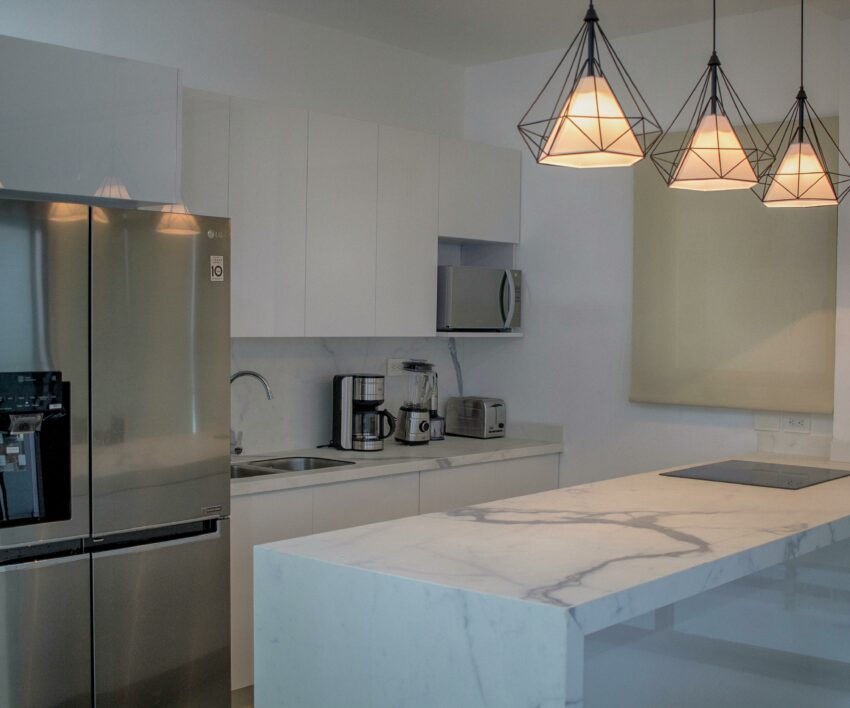
Kitchen lighting is a functional matter as much as an aesthetic one. The most important thing is to ensure the working surfaces are properly lit, which a central ceiling fixture alone cannot do: it places the light source behind the cook, who then casts a shadow onto the very surface they are working on.
Under-cabinet lighting, directed at the counter, solves this problem directly and is one of the most practical lighting upgrades available in any kitchen. LED strip lights fitted beneath wall cabinets are inexpensive, easy to install and make a significant difference to working conditions. For the broader kitchen space, recessed downlights positioned over the island or work surfaces are more effective than a single pendant centred in the room. Pendant lights over a kitchen island work well as accent and ambient sources, but should be positioned at a height that illuminates the counter without creating glare at eye level when seated.
Bedrooms: soft, layered and controllable
The bedroom is a room where the lighting needs to shift between different modes: bright enough to dress and get ready in the morning, calm and warm enough to wind down in the evening. A single overhead light rarely serves either purpose well.
Bedside lamps are the most important addition to a bedroom lighting scheme. They allow each side of the bed to be lit independently and place the light source at a comfortable reading height without illuminating the whole room. A dimmer on any overhead source gives control over the ambient level. Where built-in storage or a dressing table is present, a small task light directed at the mirror or the wardrobe interior makes a practical difference that is easy to overlook until it is there.
Also see: The most common decorating mistakes and how to fix them
Home offices: indirect, even and glare-free
Lighting in a home workspace has a direct effect on concentration, eye strain and sustained comfort over a long working day. The most important principle is indirection: a light source that shines directly onto a screen creates glare that forces the eyes to constantly adjust, which is fatiguing over time.
Position the primary light source to the side of the screen rather than behind or directly above it. An adjustable desk lamp allows task lighting to be directed precisely and repositioned as needed. If natural light from a window is available, sitting with it to the side rather than behind preserves the benefit of daylight without introducing glare. Sheer curtains or solar shades are worth fitting to any window that receives strong direct sun, softening the light without blocking it entirely. A cool-toned bulb in the 4,000 Kelvin range promotes alertness and suits working hours well in a dedicated office space.
Bathrooms: even light for practical tasks
Bathroom lighting is frequently underestimated and oversimplified. A single overhead downlight creates strong shadows across the face, which makes tasks like applying makeup or shaving significantly harder than they need to be. The ideal bathroom lighting surrounds the mirror with light rather than casting it from above.
Wall-mounted lights positioned on either side of the mirror at roughly eye level produce the most even and flattering illumination for tasks at the basin. Where this is not possible, a well-lit mirror with integrated LED lighting around its perimeter is an effective alternative. A separate ambient light for the rest of the bathroom, warmer in tone than the mirror lighting, allows the room to shift between functional and relaxed use, which is particularly useful in bathrooms that double as spaces to wind down at the end of the day.
Hallways and entrance spaces
Entrance halls and corridors are almost always neglected when it comes to lighting, yet they are the first spaces a visitor sees and the last spaces you move through before leaving the house. A well-lit entrance sets the tone for the whole interior and makes a home feel larger and more considered.
A pendant or statement ceiling fitting in an entrance hall justifies more decorative ambition than a utilitarian fitting, because it is seen in full rather than from below, as in other rooms. Wall sconces or a lamp on a console table add warmth at eye level. In long corridors, spaced downlights or a series of wall lights are more effective than a single source, which leaves the far ends of the passage in relative darkness. These are the finishing details of a well-lit home, and they have more impact than their modest scale might suggest.
Also see: Cheap and fun ways to redecorate your house
Feature Image: Pexels
Compiled by Jade McGee
First published on Garden and Home
Be the first to know – Join our WhatsApp channel for content worth tapping into. Click here to join!