For many of us, exercise didn’t start as a form of self care — it started as a requirement and a chore. A way to burn off what we ate, to shrink ourselves, to earn rest, or to fix something we were told was wrong. Somewhere along the way, movement became transactional. Conditional. Heavy.
Healing your relationship with exercise isn’t about doing more workouts or finding the “right” routine. It’s about unlearning the stories that taught you movement had to hurt to be effective — and relearning how to move in a way that feels supportive, sustainable, and human.
How we learned to fear (or force) fitness
Diet culture, wellness trends, and social media have long sold us a narrow version of fitness – intense, aesthetic-driven, and often inaccessible. Rest days are framed as laziness. Low-energy days are seen as failures. And bodies are treated like projects rather than homes.
If exercise has ever felt like punishment for eating, something you “fall off” and “get back on”, an all-or-nothing commitment or a source of guilt instead of grounding – you’re not broken, you were just conditioned.
Redefining what movement is meant for
Healing begins when you shift the purpose of exercise. Movement is not a tool to control your body — it’s a way to connect to it.
Instead of asking: How many calories did I burn?, try asking: How do I feel after moving like this?
Instead of: Will this change my body? Ask: Does this support my energy, mood, and nervous system today?
When exercise becomes about circulation, strength, mobility, joy, stress release, or mental clarity — it stops feeling like a battle and starts feeling like a partnership.
Listening to your body (Not fighting it)
A healed relationship with fitness honours seasons. Some weeks you’ll crave strength training and long walks. Other weeks, gentle stretching or rest will be the most supportive choice.
This is not inconsistency — it’s intelligence.
Learning to listen means resting without guilt, choosing low-impact movement when stress is high, letting your cycle, hormones, mental health, and energy levels guide you and understanding that showing up looks different every day.
Consistency doesn’t mean doing the same thing. It means staying in relationship with yourself.
Decoupling exercise from body size
One of the most powerful (and uncomfortable) steps in healing is separating movement from weight loss.
Yes, bodies may change when we move more — but when that becomes the only goal, motivation is fragile and joy disappears. Movement rooted in self-respect lasts longer than movement rooted in self-criticism.
You don’t need to earn your food.
You don’t need to punish your body to deserve care.
You don’t need to look a certain way to be “fit enough” to move.
Your body is already worthy of movement — exactly as it is.
Finding movement that feels like you
Healing often means letting go of what you think you should enjoy and discovering what you actually do.
That might look like:
- Walking instead of running
- Pilates instead of HIIT
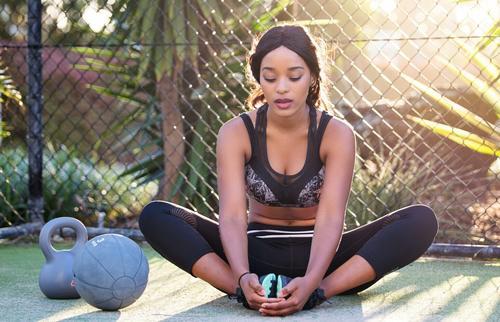
- Swimming, dancing, hiking, yoga, or mobility work
- Short sessions instead of long workouts
- Exercising alone, or with a friend, or not in a gym at all
The best form of movement is the one you’ll return to — not because you have to, but because it makes your life feel better.
Progress that isn’t visible
A healthier relationship with exercise often shows up quietly:
- Less dread before moving
- More compassion on off-days
- Feeling stronger, calmer, or more capable in daily life
- Not spiralling when you miss a workout
- Trusting your body’s cues again
This kind of progress won’t always be visible — but it’s deeply transformative.
Moving forward with kindness
Healing your relationship with exercise is not a linear journey. Old thoughts will resurface. Motivation will ebb and flow. That’s okay.
You’re not failing — you’re learning.
Movement is not something to conquer.
Your body is not something to fix.
Exercise can be a form of care, presence, and self-trust.
When you stop asking your body to prove itself, and start asking how you can support it — everything changes.
Compiled by Amy Steenkamp
First published on Woman and Home
Also see: Empowered & Energized: Why Regular Exercise is Essential for Women’s Health