A Barbie moment that hits close to home
For decades, Barbie has shaped childhood imagination around the world. This week, that imagination took a powerful turn toward inclusion and for Nandi Madida, it became deeply personal.
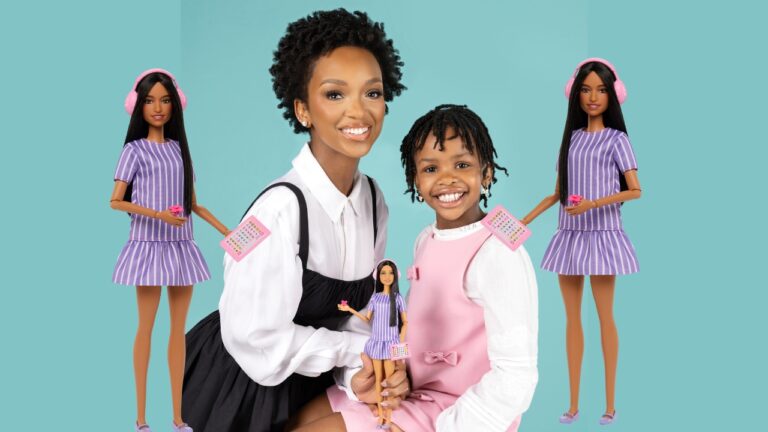
Mattel has unveiled its first-ever autistic Barbie doll, created in collaboration with members of the autistic community to reflect how some autistic people experience, process, and communicate with the world. Among the faces connected to this landmark launch is Nandi’s six-year-old daughter, Nefertiti Madida.
A South African family at the heart of a global launch
Barbie partnered with Nandi Madida, South African actress, singer, autism advocate, and founder of The Motherhood Network podcast, for the campaign, alongside Nefertiti. The choice felt intentional. Nandi has been open about raising a neurodivergent child, often using her platform to challenge stigma and start honest conversations about parenting, diagnosis, and acceptance.
Seeing her daughter included in a global moment of representation was, as she shared online, overwhelming in the best way.
Taking to Instagram, Nandi described the experience as emotional and unforgettable, saying she was incredibly proud to witness Nefertiti being part of what she called a powerful milestone in inclusive representation.
Why this Barbie matters
This is not just another addition to Barbie’s ever-growing lineup. According to Mattel, the autistic Barbie was developed with guidance from the autistic community, ensuring it reflects real lived experiences rather than stereotypes.
In commentary shared as part of the announcement, Nandi reflected on how becoming a mother to an autistic child has completely reshaped her understanding of representation. While Barbie has always symbolised imagination and comfort, she said this doll goes further, it acknowledges children who are often left out of mainstream narratives.
For autistic children, seeing themselves in a toy can be affirming in ways adults often underestimate. It sends a simple but powerful message: you belong.
View this post on Instagram
Teaching empathy through play
Nandi also highlighted the impact this doll could have beyond the autistic community. For non-autistic children, the autistic Barbie offers an early introduction to empathy, curiosity, and respect, lessons learned not through lectures, but through play.
In a country like South Africa, where conversations around neurodiversity are still emerging in many communities, representation at this level carries extra weight. Toys are often a child’s first window into the wider world. When that world reflects difference without judgement, it quietly shapes more compassionate adults.
Public reaction: ‘This is how change starts’
Online reaction to the launch has been largely positive, with parents, educators, and autism advocates praising Mattel for taking a meaningful step rather than a symbolic one. Many South African social media users applauded Nandi for continuing to use her visibility to push for inclusion, not just in words, but in action.
For some parents of neurodivergent children, the moment felt long overdue.
A creative, conscious household
Nandi and her husband, Grammy Award-winning musician and producer Zakes Bantwini, are raising two children — Shaka and Nefertiti — in a home where creativity and self-expression are clearly encouraged. Last year, their son Shaka marked his ninth birthday with his first solo art exhibition, a moment that also captured public attention.
Together, these moments paint a picture of a family redefining success, visibility, and pride on their own terms.
More than a doll
The launch of the first autistic Barbie may seem small to some, just another toy on a shelf. But for families who rarely see themselves reflected in mainstream culture, it’s a powerful reminder that inclusion can start early, quietly, and beautifully.
And for Nandi Madida, it’s a moment that blends motherhood, advocacy, and love, one she says she’ll hold onto forever.
Source: IOL
Featured Image: X{@CapeTownEtc}