
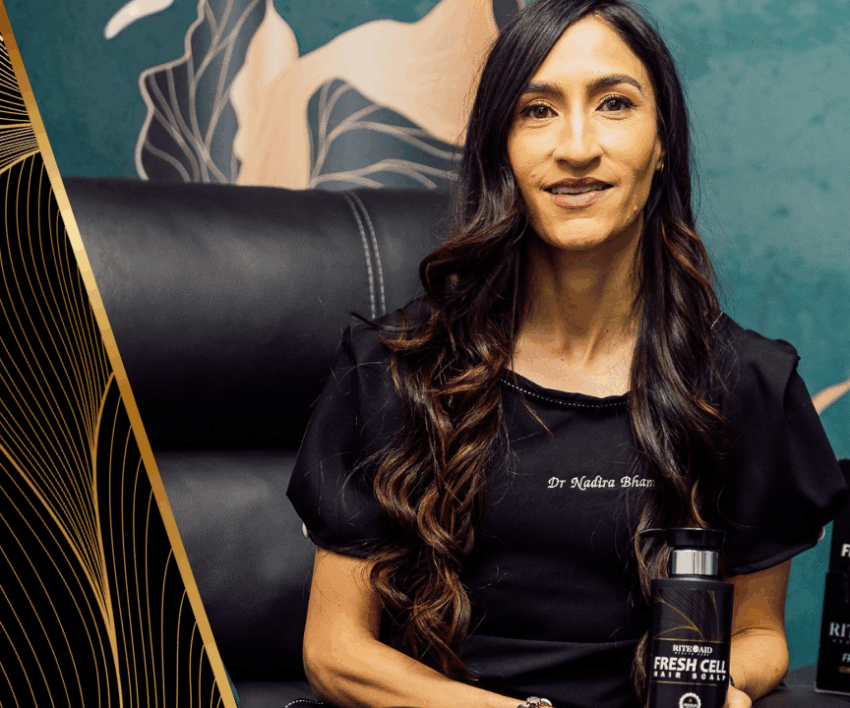
By Dr Nadira Bhamjee MBChB (UCT)
Hair plays an essential part in one’s self-confidence, self-expression, and image. In today’s world where emphasis is placed on one’s external appearance, loss of hair can result in serious negative effects such as depression, embarrassment, and withdrawal from social interactions.
As a medical professional, I have encountered numerous cases of hair loss in both males and females, young and old. Each case requires a holistic approach targeting the various triggers contributing to the hair loss. In this article, I will discuss a patient with traction alopecia.
Patient profile
Sex: Female
Age: 37-year-old
History: Hair loss in the frontal hairline due to years of wearing tight braids and using wigs secured with glue.
Treatment protocol:
1. Investigations:
As part of a comprehensive treatment plan, I sent the patient for blood tests. This is vital to identify any nutritional deficiencies or medical conditions that may be impacting hair growth.
2. Products:
Fresh Cell Shampoo was chosen, as it contains human stem cell culture medium and herbs that promote hair growth and maintain scalp health. These ingredients have anti-inflammatory and antioxidant properties, improve blood flow, and gently exfoliate the outer layer of skin.
She was started on topical minoxidil daily. Topical minoxidil promotes hair growth by extending the anagen phase (growing phase) of the hair cycle and by stimulating circulation around the hair follicles. (1)
3. In-house treatments:
Growth factor treatments were administered once a month to stimulate hair growth and density.
4. Lifestyle:
Cessation of tension hairstyles and implementing protective hairstyles. Lifestyle modifications highlight the impact that overall health and wellbeing has on hair and scalp conditions as well as the need for a well-balanced diet and exercise.
Results:
*All photographs included in this article were taken with the consent of the patient.
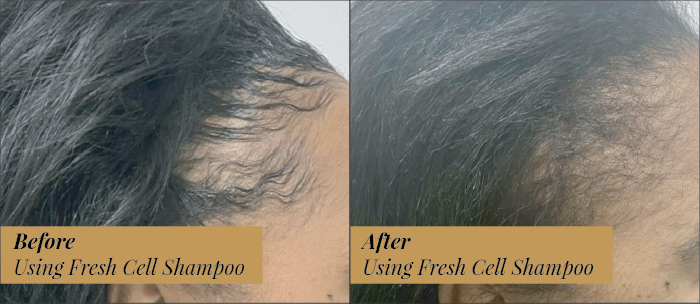
After 3 months
These photographs showcase my patient’s visible results after just 3 months of treatment. There is new hair growth along her hair line and improvement in hair density and hair texture. There are significant signs of reversal of the traction alopecia. We expect that continued treatments and product use will yield even further improvements.
Discussion:
Traction alopecia has a reported prevalence of 31,7% in African women aged 18–86 years and 17,1% in African schoolgirls aged 6–21 years. (2)
Traction alopecia is a form of hair loss that is associated with repetitive or prolonged tension or chronic pulling on hair. Hairstyles that are associated with an increased risk of traction alopecia include tight braids, locks, tight buns, hair glue, hair extensions, and tight ponytails.
It is important for anyone suffering from traction alopecia to consult a hair loss specialist as soon as possible. If treatment is initiated early on and the tension-related hairstyles are ceased, it is possible to prevent further hair loss and to regrow hair. However, severe and prolonged untreated traction alopecia can lead to permanent scarring alopecia, whereby regrowing the hair is unlikely.
This case highlights the challenges of hair loss and the multifaceted strategy that is needed to address it. Hair loss can be triggered by a variety of factors including genetics, stress, hormonal imbalances, nutritional deficiencies, and physical damage to the hair follicles.
With the endless amounts of hair loss products on the market and being advertised on social media, it can be overwhelming to decide what to try. It is important to use products that are formulated with high-quality ingredients that will address the specific hair or scalp concern. I recommend choosing a targeted hair loss shampoo, such as Fresh Cell Shampoo. Fresh Cell Shampoo combines stem cell technology with clinically proven ingredients such as olive leaf extract, green tea extract, rosemary leaf oil, niacinamide, Centella Asiatic extract, menthol, salicylic acid and panthenol. Topical minoxidil is FDA approved for androgenic alopecia in male and female pattern hair loss. (3) It has been used off label for other types of alopecia with varying success. It is a medication that should only be used after a consultation with a hair specialist to exclude any contraindications and to discuss the side effects and risks thereof.
In conclusion, my advice is to seek help early on from a hair loss specialist who will assist with a diagnosis and formulating a patient-specific treatment plan. A holistic approach would incorporate a range of treatments, products, and lifestyle modifications to achieve optimal results.
References ;
(1) Patel, P., Nessel, T.A., & Kumar D, D. (2024). Minoxidil. In StatPearls. Statpearls Publishing.
(2) Khumalo, N.P., Jessop, S., Gumedze, F., & Ehrlich, R. (2008). Determinants of marginal traction alopecia in African girls and women. Journal of the American Academy of Dermatology, 59(3),432–8. https://doi.org/10.1016/j.jaad.2008.05.036
(3) Suchonwanit, P., Thammarucha, S., & Leerunyakul, K. (2019). Minoxidil and its use in hair disorders: a review. Drug design, development and therapy. 13, 2777–2786. https://doi.org/10.2147/DDDT.S214907

Social Media handles:
Instgram – fresh_cell_haircare
Face Book – Fresh Cell Haircare
Also see: Struggling with hair loss? Here’s the Rite choice for you