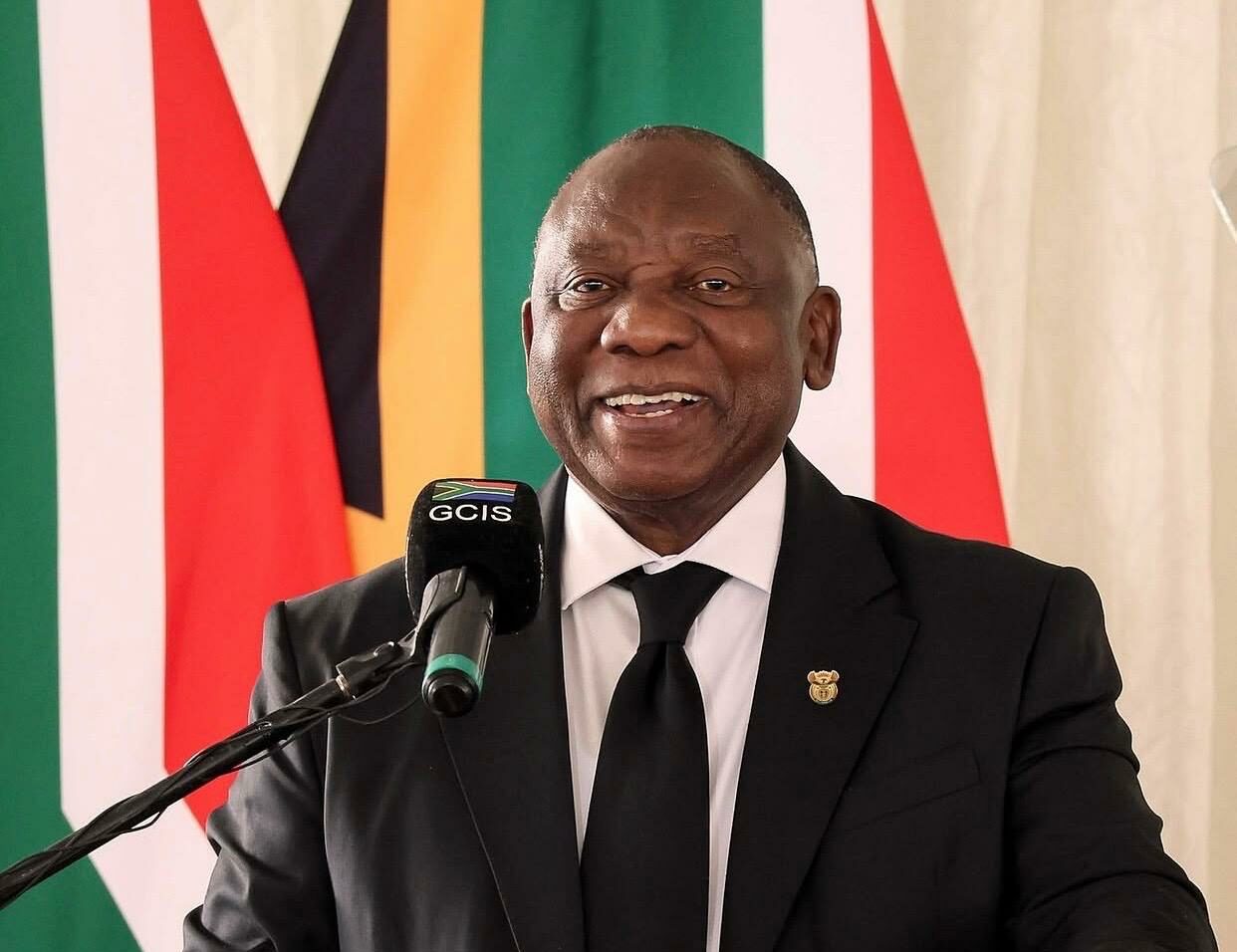
In a landmark segment broadcast on SABC News, President Cyril Ramaphosa delivered a stark assessment of South Africa’s agricultural landscape, confronting the reality that Black South Africans still remain largely excluded from mainstream commercial farming and agricultural ownership.
Also see: Keke Mphuti enrols in poultry farming
Speaking during a site visit to a flourishing Black-owned dairy farm supported by state funding, the President emphasised that achieving true racial equity in the sector requires dismantling decades of systemic barriers that extend far beyond land access.
Overcoming generations of economic exclusion
During his address on SABC News, President Ramaphosa highlighted that while South Africa’s agricultural sector is one of the primary backbones of the national economy, its ownership demographics remain deeply skewed.
Generations of discriminatory laws not only stripped Black South Africans of ancestral land, but deliberately blocked them from acquiring the financial capital, credit lines, and technical skills needed to build viable commercial agricultural enterprises.
The President noted that despite three decades of democracy, many emerging Black farmers continue to face steep hurdles. They remain excluded from prime commercial farming networks, struggle to secure affordable loans from private commercial banks, and face significant barriers when attempting to enter established retail and export supply chains.
Without targeted interventions, Ramaphosa warned, agriculture will remain one of the least transformed sectors in the country.
WATCH | “Apartheid did not merely dispossess Black South Africans of land, it denied them access to land and finance,” says President Cyril Ramaphosa. https://t.co/eTFZef315W
— SABC News (@SABCNews) October 8, 2026
The role of government finance in bridging the gap
To counter this persistent exclusion, the government has placed state-backed financial mechanisms at the centre of its agricultural transformation strategy. The visit served to showcase how targeted funding—such as the government’s Blended Finance Scheme (BFS), managed via the Land Bank and the Department of Agriculture—is actively breaking down these economic walls.
Also see: Gogo Maweni shows off latest passion – Cattle farming
By combining direct government grants with low-interest commercial loans, the state aims to de-risk investments for Black farmers who would otherwise be turned away by traditional financial institutions due to a lack of collateral.
In the case of the visited dairy farm, state financing provided the critical leverage needed to:
- Acquire commercial land: Transitioning the enterprise from small-scale production to a fully recognised commercial dairy operation.
- Procure high-tech equipment: Funding modern milking parlours, cold-storage infrastructure, and livestock management technology.
- Maintain operational working capital: Ensuring the farm can sustain input costs like feed, veterinary care, and labour during seasonal fluctuations.
A vision for an inclusive agricultural future
President Ramaphosa insisted that land redistribution alone is meaningless if it is not paired with comprehensive financial backing, mentorship, and guaranteed market access.
He called on private commercial banks, corporate agri-businesses, and supermarket chains to play an active role in integrating Black-owned farms into their primary supply networks.
The success of Black-owned agricultural enterprises proves that given equal access to land and finance, Black South Africans can lead world-class commercial farming operations that drive food security, rural employment, and sustainable economic growth.
Also see: Uzalo actress trades TV for farming journey
Be the first to know – Join our WhatsApp channel for content worth tapping into. Click here to join!