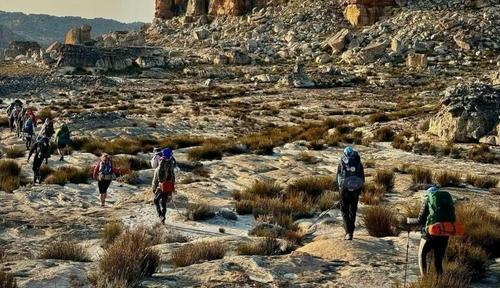
Summer season is upon us, what better way to hustle for a hot body than to hike a mountain.
This is not as easy as it seems, as many dangers linger in the mountain such as attacks, muggings and some falling off the mountain which may lead to serious injuries or death.
According to Arrive Alive, these are the risks and hazards of the hiking trail:
- Hikers get lost.
- Medical incidents such as strokes, heart attacks and illnesses.
- Fatigue, hyperthermia, dehydration and heat exhaustion.
- Injuries from slips and falls on the trail.
- Injuries caused by animals, snakes and insects on the trail.
- Hikers get trapped or injured by forces of nature such as flooding, wildfires and lightning.
- Injuries brought about criminal attacks, assaults and robberies.
South African National Parks has given 10 rules of mountain safety, which are:
- Don’t hike alone; four is the ideal number.
- Choose your route carefully and stick to it. Allow yourself enough time- start early. Inform someone of your route and what time you are expected back.
- Choose a hike leader and walk at the pace of the slowest member
- If lost- don’t split up. Rather try to retrace your steps. Remember that climbing down is more difficult than climbing up.
- Always wear waterproof clothing, even in mid-summer and wear walking shoes or hiking boots. Wear a hat or cap and sunblock in summer. Weather changes rapidly.
- If lost or forced to stop because of bad weather, stay together and remain in one place. Find the closest shelter from wind and rain.
- In case of injury, take time to assess the situation. Then send two people for help and let the third remain with the injured person. If possible, mark the position on a map and send it to those going for help.
- Stick to well-used paths, which will be indicated on the park’s hiking map and read the warnings on this map. Don’t take shortcuts and especially don’t wander into ravines.
- Always take enough water, especially in summer and food in case of delay. Watch the weather and time and turn back before you start running late or if bad weather threatens.
- Take a fully charged cell phone. Some parts of the park do not have cell phone reception, but you will always be able to reach a place where you can use a cell phone more quickly than you will get to a landline.
Also see: ‘Tis the season to give’ – Unwrapping the power of gifting