
Most families know to brush twice a day. But a child brushing on their own, a teenager cleaning around braces and an older relative dealing with a dry mouth can all need different kinds of help.
Also see: Helpful tips to get a toddler to brush their teeth
Even when everyone is brushing regularly, small gaps in the routine can go unnoticed.
Dirna Grobbelaar, Ivohealth’s Oral Hygiene Advisor and GUM spokesperson, shares seven mistakes to look out for and what families can do differently to avoid them.
1. Brushing for less time than you think
Two minutes can feel surprisingly long when you’re getting ready for school or heading to bed. Grobbelaar says many people stop after a minute or less without realising it.
“Try using a timer for a few days to see how long each person actually brushes, then work towards two minutes, morning and night,” she advises.
2. Brushing harder to get teeth cleaner
It’s easy to think that brushing harder will remove more plaque, but too much pressure can irritate gums and wear down enamel.
“Choose a soft toothbrush and angle the bristles towards the gumline,” says Grobbelaar. “Use small, gentle movements to clean each tooth, rather than pressing harder.”
3. Leaving out the spaces between teeth
The unfortunate truth is that a toothbrush cannot clean every single tooth surface in your mouth. Food and plaque can remain between teeth unless you clean those spaces too. This becomes especially relevant for children as their permanent teeth come in and sit closer together.
“Floss or an interdental tool, such as GUM Soft-Picks PRO, can help clean where a toothbrush cannot reach,” says Grobbelaar.
Also see: Natural remedies to whiten stained teeth
4. Assuming children can brush thoroughly on their own
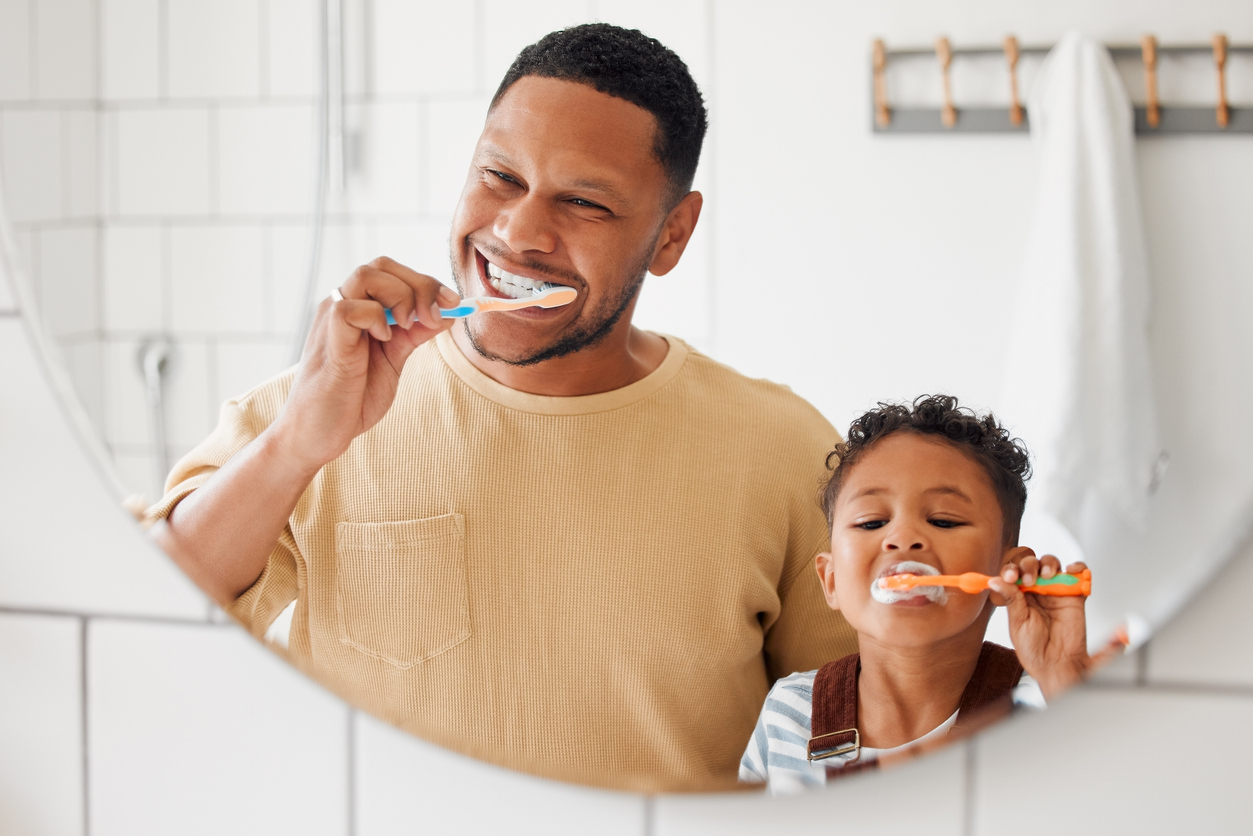
Children may be keen to brush by themselves, but they can still miss parts of their mouths. Grobbelaar recommends helping with their brushing until around ages eight to 10. One way to do this is to let your child brush independently in the morning, then brush their teeth for them before bed.
5. Treating braces like ordinary teeth
Brackets and wires create more places for plaque to collect. If a teenager brushes around them too quickly, they may miss areas that need extra attention. Cleaning between the teeth can also take more effort.
“Flossing around braces can be tricky, but it’s important not to leave those spaces out,” says Grobbelaar. “GUM Ortho Floss is designed to thread around the wires, making it easier to clean between the teeth.”
6. Rinsing with water straight after brushing
Rinsing after brushing may feel like the natural final step, but it washes away much of the crucial ingredients that should be left behind by your toothpaste. Ingredients like fluoride need time in contact with teeth to work.
Grobbelaar suggests cleaning your tongue and between your teeth first, then brushing with a product like GUM Bio Toothpaste. When you’re done, spit out the excess toothpaste without rinsing with water. It’s a small change to the order of your routine that gives the fluoride more time to work.

7. Overlooking a dry mouth in an older family member
A dry mouth may seem like a minor discomfort, but saliva helps protect teeth and clear away food particles. Grobbelaar says she often sees dry mouth in older patients, sometimes as a side effect of medication. If a family member mentions it, encourage them to raise it with their dentist or oral hygienist rather than dismissing it as part of getting older.
Regular visits to an oral hygienist or dentist give families a chance to check their technique and deal with concerns before they become bigger problems.
“The aim isn’t to give everyone in the family the same routine. It’s to notice where each person needs a little more help and make those changes part of their daily care,” concludes Grobbelaar.
Featured image: iStock/koldo studio
Also see: Why you shouldn’t rinse after brushing your teeth
Be the first to know – Join our WhatsApp channel for content worth tapping into. Click here to join!