South Africa’s upcoming local government elections are shaping up to be one of the country’s most competitive municipal contests, with the Electoral Commission of South Africa (IEC) recording a 43% increase in candidate nominations compared with the 2021 local elections.
The IEC says it received 142,072 candidate nominations for the 2026 elections, compared with about 99,000 nominations in 2021. The candidates will compete for 10,526 councillor seats when South Africans head to the polls on 4 November 2026.
The sharp increase points to heightened political competition at the local level, as established parties, newer political formations and independent candidates seek representation in municipalities across the country.
Also see: IEC ready for nationwide voter registration drive
More than 140,000 candidates nominated
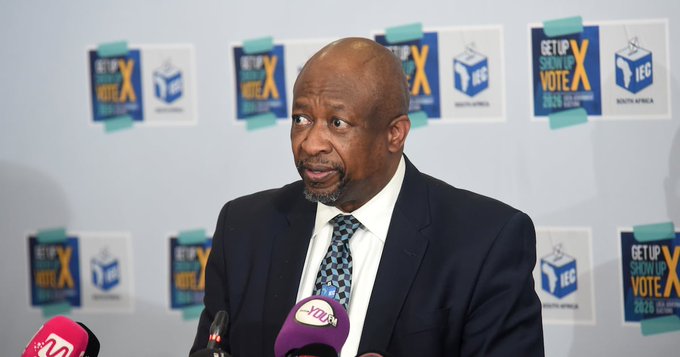
IOL reported that the IEC chairperson Mosotho Moepya said political parties nominated 40,241 candidates for proportional representation seats, while 100,856 candidates were nominated for ward seats. A further 975 independent candidates are contesting ward seats.
According to the IEC, the nomination process closed at 17:00 on 28 August, following submissions through the IEC’s online candidate nomination system and manually at IEC offices.
The publication adds that the commission recorded nominations from hundreds of political parties and independent candidates.
In total, 546 of South Africa’s 782 registered political parties are contesting elections at different levels.
The scale of participation is particularly evident in the country’s major metropolitan municipalities.
Also see: Labour Party approaches IEC in a bid to postpone the elections
A fragmented political landscape
The surge in candidates comes against the backdrop of an increasingly fragmented political environment at the local-government level.
South Africa’s municipalities have faced growing political competition and, in several cases, coalition administrations.
These upcoming local elections carry significant implications for who will control councils and how municipalities will be governed after the vote.
EWN reports the IEC previously described the political environment surrounding the elections as particularly challenging. Its voter participation research has also highlighted declining trust in some institutions and concerns about citizens’ willingness to participate in elections.
The large number of candidates could consequently represent both stronger political engagement and greater fragmentation, with voters potentially facing a wider range of choices on the ballot.
With more candidates competing for municipal seats and hundreds of political parties participating, the November election is likely to produce highly contested races in municipalities across the country.
For voters, the increased number of candidates means a broader choice. For political parties, however, it signals a more crowded contest in which winning enough support to secure council representation could prove increasingly difficult.
The IEC’s next major milestone will be the publication of the final candidate list on 16 September, bringing greater clarity to the political field ahead of election day.
Also see: South Africa’s November local elections: Observers share key insights
Featured image: X/@IECSouthAfrica
Be the first to know – Join our WhatsApp channel for content worth tapping into. Click here to join!