
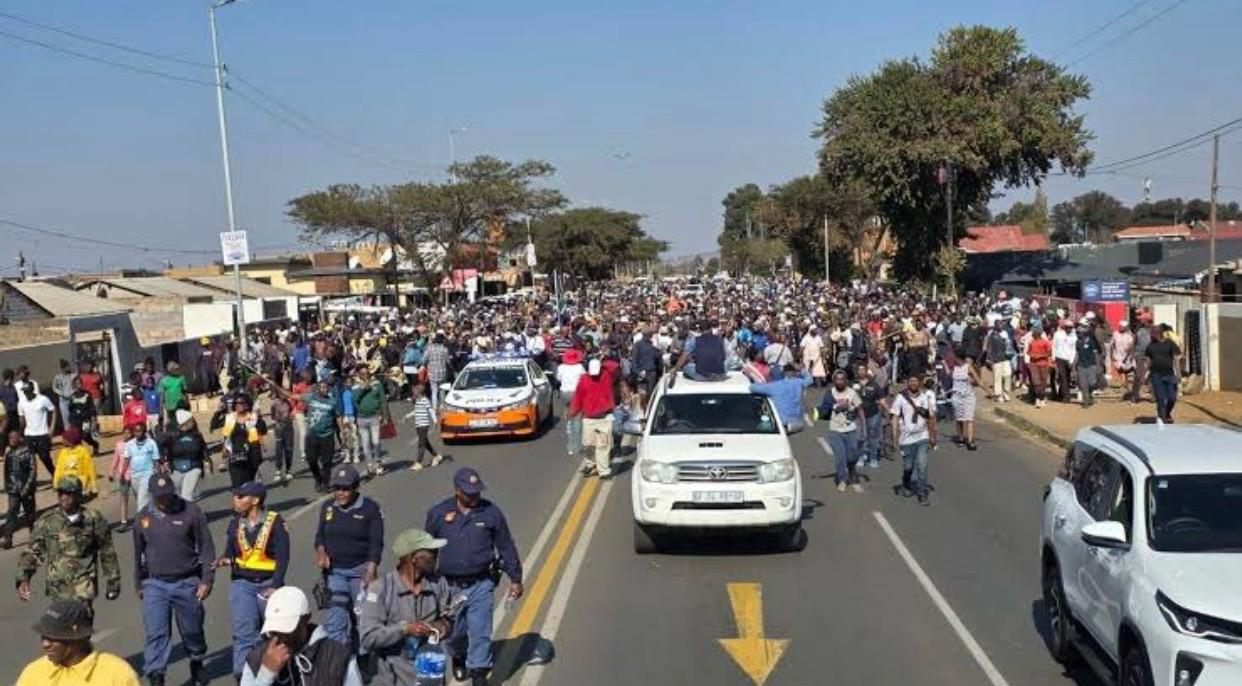
A wave of civil demonstrations sparked by a landmark Constitutional Court ruling on asylum seeker protections has ignited intense social media debate across South Africa.
Also see: Home Affairs warns disinformation about asylum seekers could fuel violence
Following public protests in towns such as Lusikisiki in the Eastern Cape, local Home Affairs offices face blockades as residents demonstrate against court decisions allowing undocumented foreign nationals to apply for asylum.
However, as video clips of street marches circulate online, public commentary has quickly shifted from the legal merits of the ruling to sharp regional divisions, inter-provincial friction, and political voter mobilisation.
Regional disparities and public backlash
The online discourse surrounding recent demonstrations reveals significant polarisation across different provinces.
Social media users in KwaZulu-Natal and parts of Gauteng have openly criticised residents of Limpopo and the Eastern Cape for what they perceive as a passive response to national policy changes.
Commentators frequently contrast regional protest participation, accusing certain provinces of remaining silent during civic movements while praising localised marches in towns like Lusikisiki, Flagstaff, and Port St Johns as examples of active community mobilisation.
Conversely, counter-arguments from Limpopo residents push back against these expectations. Social commentators argue that abstaining from street protests does not equate to apathy, citing a priority on economic productivity, local governance stability, and educational focus over public demonstrations.
Also see: Ramaphosa hails 7 million trees milestone amid public backlash over living costs
This regional back-and-forth highlights how national social issues frequently fracture along provincial and ethnic identity lines within public discourse.
Limpopo and Eastern Cape people we must be ashamed of ourselves…. 😩 https://t.co/QxOMo9cThO
— ChrisExcel (@ChrisExcel102) October 8, 2026
Political alignment and electoral mobilisation
The public debate over civic protests has also intersected with broader political campaigning ahead of upcoming local political milestones. Critics on digital platforms have pointed to union activities, such as the South African Democratic Teachers Union (SADTU) hosting anniversary events and regional gatherings, as covert political campaigning for the ruling African National Congress (ANC).
Commentators express frustration over traditional voting patterns, arguing that political loyalty remains entrenched despite ongoing economic and administrative challenges across rural municipalities.
Simultaneously, alternative political movements, including the uMkhonto weSizwe Party (MKP), are increasingly referenced in online debates as preferred options for voters seeking stricter border controls and assertive policy enforcement.
As public frustration grows over judicial rulings, immigration enforcement, and social cohesion, digital commentary reflects a deeply divided electorate wrestling with how best to channel civic dissatisfaction into tangible political change.
Also see: Claims of over 3 million refugees and asylum seekers applying for SASSA relief grants divide
Be the first to know – Join our WhatsApp channel for content worth tapping into. Click here to join!