Do you want to brighten up your space with a fresh new look? Painting over dark colours can be a bit tricky, but with the right approach, you can achieve a stunning finish.
Here’s how to paint over dark walls in your home, along with tips and tricks on how to prepare your walls before painting, what sort of paint you will need, and how many coats your dark walls will need for a refresh.
How to prep walls before painting
Before we get into how to prime and paint over dark colours on your walls, you need to ensure that your walls are correctly prepared to avoid any mistakes:
Clean the walls thoroughly with soap and water.
- Fix any holes or cracks with patching plaster or crack filler.
- Sand the walls to smooth out any rough spots.
- Remove any switch plates, outlet covers, and light fixtures.
How to prime your walls for painting over dark colours
Use a good-quality primer to cover the dark colour. Opt for a high-quality, stain-blocking product specifically designed for covering dark colours. Look for one that also provides good adhesion for the new paint.
Apply at least two coats, allowing the first coat to dry completely before applying the second. This will ensure a strong bond between the old paint and the new.
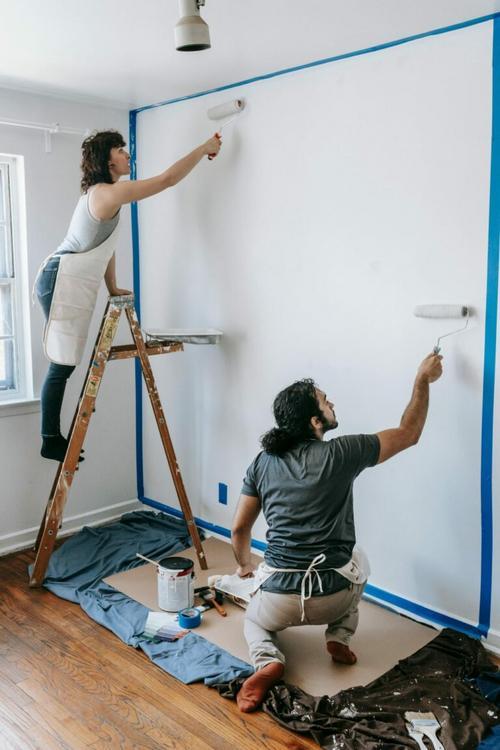
Choosing the right paint to cover dark walls
Choose a paint colour that’s one to two shades lighter than the original dark colour. This will help cover the dark colour more effectively and will reduce the number of coats needed.
Select a high-quality paint with good coverage and opacity. Paints with higher pigment content cover dark colours better.
When opting for a finish, a matte or eggshell finish can help hide flaws on walls with imperfections. For a more durable and easy-to-clean surface, choose a satin or semi-gloss finish. These finishes reflect more light, which can help brighten the room, too.
Tips for painting over dark walls
- Use a paint with a high hiding power to ensure optimal coverage
- Apply paint in thin, even layers to avoid drips and streaks
- Use a paintbrush to cut in around edges and corners
- Consider using a paint with a built-in primer to save time
Here are some frequently asked questions, when it comes to painting over dark walls:
Do I need to sand the walls before painting?
Yes, sanding the walls will help to smooth out any rough spots and ensure a strong bond between the old paint and the new.
Can I use a regular primer instead of a specialised one?
While regular primers can work, a specialised primer designed for covering dark colours will provide better results.
How long should I wait between coats?
Wait at least two hours or according to the manufacturer’s instructions.
Compiled by: Savanna Douglas
First published by Woman & home