South Africa has produced far more than famous musicians, sporting stars and cultural icons.
Over the years, South Africans have also come up with inventions and innovations that have changed lives, solved everyday problems and, in some cases, found their way around the world. While some are household names, others are much less obvious.
Also see: Meet Mala Bryan: An inventor of brown and black dolls
Here are a few South African inventions and innovations worth knowing about.
The CAT scan
One of the biggest contributions to modern medicine has a South African connection.
Physicist Allan Cormack was born in Johannesburg in 1924. His work on developing the mathematical foundations behind computerised tomography helped make CT scanning possible.
Cormack later shared the 1979 Nobel Prize in Physiology or Medicine with British engineer Godfrey Hounsfield for their work in developing computer-assisted tomography.
Today, CT scans are an important tool doctors use to see detailed images inside the body.
The heart transplant
South Africa also holds an important place in the history of modern medicine.
In 1967, South African surgeon Christiaan Barnard performed the world’s first human-to-human heart transplant at Groote Schuur Hospital in Cape Town. The operation made international headlines and placed South African medical expertise firmly on the global stage.
Although heart transplantation has advanced considerably since then, Barnard’s pioneering procedure remains one of the country’s best-known medical milestones.
The Pratley Putty
You may not expect a piece of putty to have a connection to space exploration, but this one does.
South African inventor George Pratley developed Pratley Putty in the 1940s. The adhesive was later selected by NASA for use on the Apollo 11 mission. The product was reportedly included in the astronauts’ equipment because of its ability to help secure components.
That means a South African invention made its way to the Moon.
Also see: Please Call Me inventor Nkosana Makate wins appeal against Vodacom
The dolosse
South Africa’s coastline has also inspired an invention that became widely used in coastal engineering.
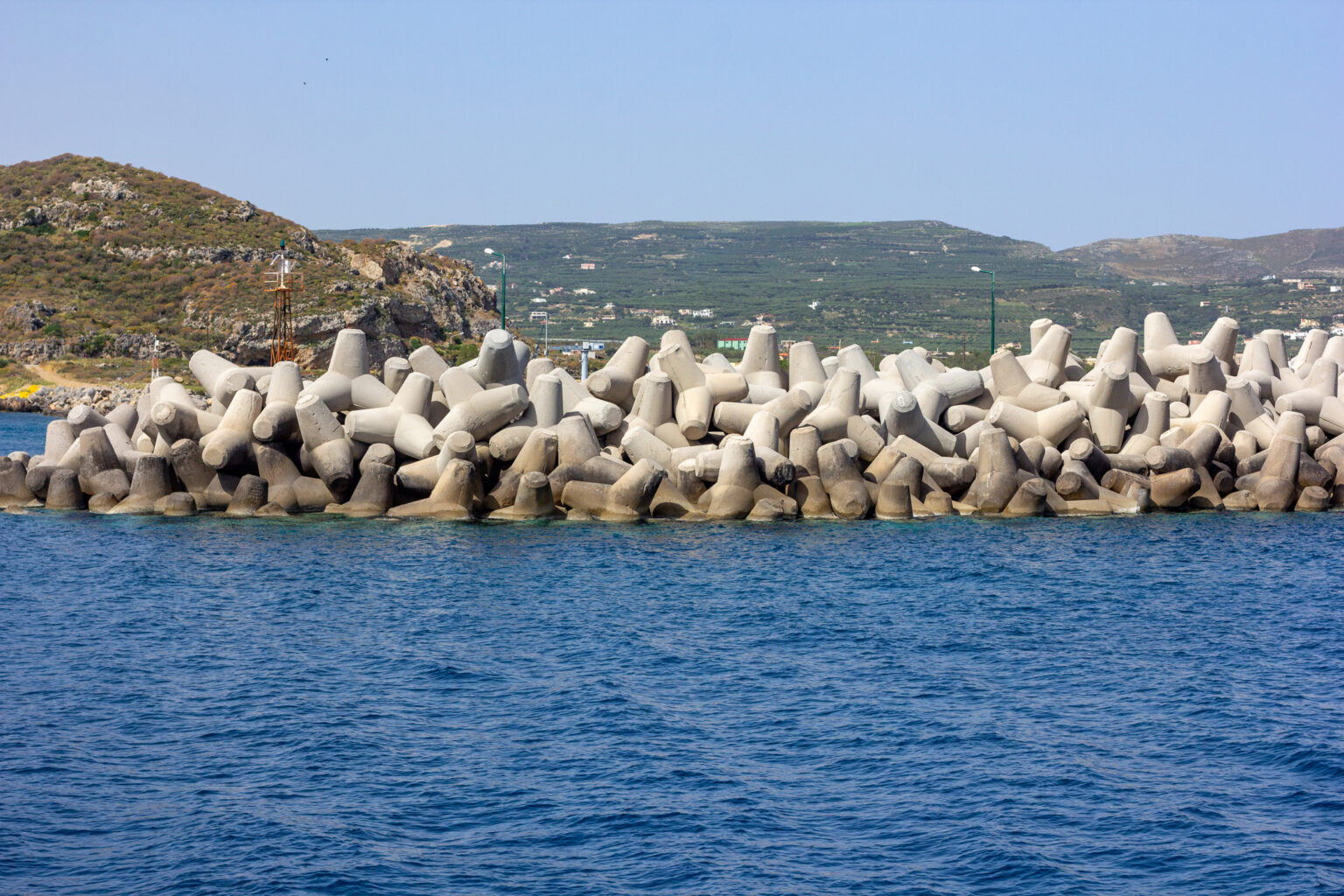
Dolosse are large concrete structures designed to protect shorelines, harbour walls and other coastal infrastructure from the force of waves. They were developed in East London in the 1960s by Eric Merrifield, who was working as a harbour engineer.
Their unusual shape allows them to interlock and dissipate the energy of incoming waves. The structures have since been used in coastal protection projects in different parts of the world.
The speed gun
Another South African invention has had a very different application: measuring speed.
The speed gun, also known as a radar gun, was developed by South African engineer Henri Jonker and his team. The technology uses radar to measure the speed of moving objects and has applications in areas such as traffic enforcement and sport.
For cricket fans, similar technology is now commonly associated with measuring how fast bowlers send the ball towards the batter.
The Smartlock safety system
South African innovation has also extended into workplace and industrial safety.
The Smartlock system was developed to improve safety around heavy machinery and industrial equipment by helping prevent machinery from being operated when safety conditions have not been met.
It is another example of how innovation does not always have to be flashy to be useful. Sometimes the most important inventions are the ones designed to make dangerous everyday tasks safer.
Also see: How to Start Over in Your 30s: Reinventing Your Life Without Feeling Behind
Be the first to know – Join our WhatsApp channel for content worth tapping into. Click here to join!