
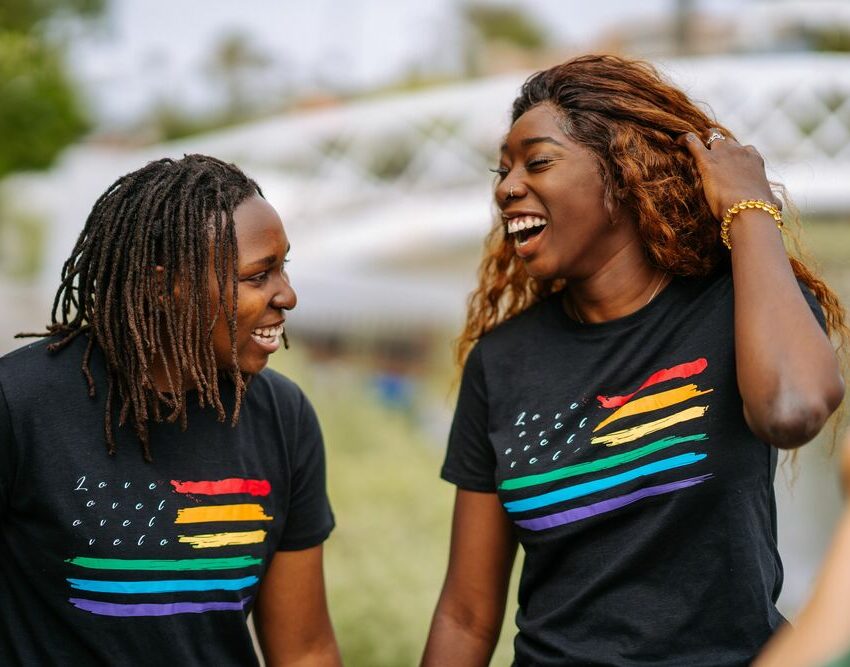
Despite growing visibility and awareness, many myths about the LGBTQ+ community continue to circulate. These misconceptions are often rooted in outdated stereotypes, misinformation or a lack of exposure to diverse experiences.
Also see: Ngizwe Mchunu’s battle with LGBTQ+ community intensifies – Public expresses concern
During Pride Month and beyond, challenging these myths can help foster greater understanding, inclusion and respect. While every LGBTQ+ person’s experience is unique, accurate information can help break down barriers and encourage meaningful conversations.
Myth 1: Being LGBTQ+ is a choice
One of the most common misconceptions is that people choose their sexual orientation or gender identity.
Major medical and psychological organisations, including the American Psychological Association, state that sexual orientation is not a choice. Similarly, gender identity is a deeply felt sense of self and is not something people simply decide to adopt.
While individuals may choose when and how to express their identity, who they are is not a lifestyle choice.
Myth 2: LGBTQ+ people all look or act the same
Another persistent stereotype is that LGBTQ+ individuals share certain physical traits, interests or behaviours.
In reality, the LGBTQ+ community is incredibly diverse. Members come from every race, culture, religion, age group and socioeconomic background. There is no single way to look, dress, speak or behave as an LGBTQ+ person.
Assumptions based on appearance often reinforce harmful stereotypes and fail to reflect the diversity within the community.
Also see: Khayelitsha community demands action after alleged murder of teen, highlighting homophobic violence
Myth 3: Being LGBTQ+ is a modern trend
Some people believe that LGBTQ+ identities are a recent phenomenon influenced by modern culture or social media.
Historical records from around the world show that diverse sexual orientations and gender identities have existed across cultures for centuries. What has changed in recent decades is visibility, legal recognition and public discussion—not the existence of LGBTQ+ people themselves.
Myth 4: LGBTQ+ people can’t have healthy relationships
A long-standing misconception is that same-sex or gender-diverse relationships are less stable or meaningful than heterosexual relationships.
Research has consistently shown that healthy relationships are built on factors such as communication, trust, respect and commitment—not on sexual orientation or gender identity. LGBTQ+ individuals form loving, lasting relationships and families just like anyone else.
Myth 5: Talking about LGBTQ+ issues influences someone’s identity
Some people worry that discussing LGBTQ+ topics in schools, media or public spaces will encourage others to become LGBTQ+.
Experts widely agree that education and representation do not determine a person’s sexual orientation or gender identity. Instead, accurate information helps reduce stigma, increase understanding and create safer environments for everyone.
Learning about diversity does not change who people are—it helps them better understand themselves and others.
Myth 6: All LGBTQ+ people have the same experiences
The LGBTQ+ community is often spoken about as though it is one uniform group, but experiences vary greatly.
Factors such as culture, geography, age, disability, religion and family background can all influence a person’s journey. A lesbian woman, a gay man, a bisexual person and a transgender person may share some experiences while facing very different challenges.
Recognising this diversity helps avoid oversimplification and promotes more inclusive conversations.
The importance of representation
Positive representation in media, workplaces, schools and communities can help challenge stereotypes and foster acceptance.
When people see LGBTQ+ individuals portrayed as complex, authentic human beings rather than caricatures or stereotypes, it becomes easier to build empathy and understanding. Representation can also help LGBTQ+ individuals feel seen, valued and included.
Moving towards greater understanding
Breaking myths about the LGBTQ+ community starts with education, open-mindedness and a willingness to listen. While misinformation can fuel prejudice and misunderstanding, knowledge has the power to create more inclusive and supportive communities.
Pride Month offers an opportunity to reflect on how far society has come while recognising the importance of continued learning and acceptance. By challenging stereotypes and embracing facts, we can help create a world where everyone is treated with dignity and respect.
Also see: Mihlali Ndamase issues apology to her LGBTQIA+ supporters
Be the first to know – Join our WhatsApp channel for content worth tapping into. Click here to join!