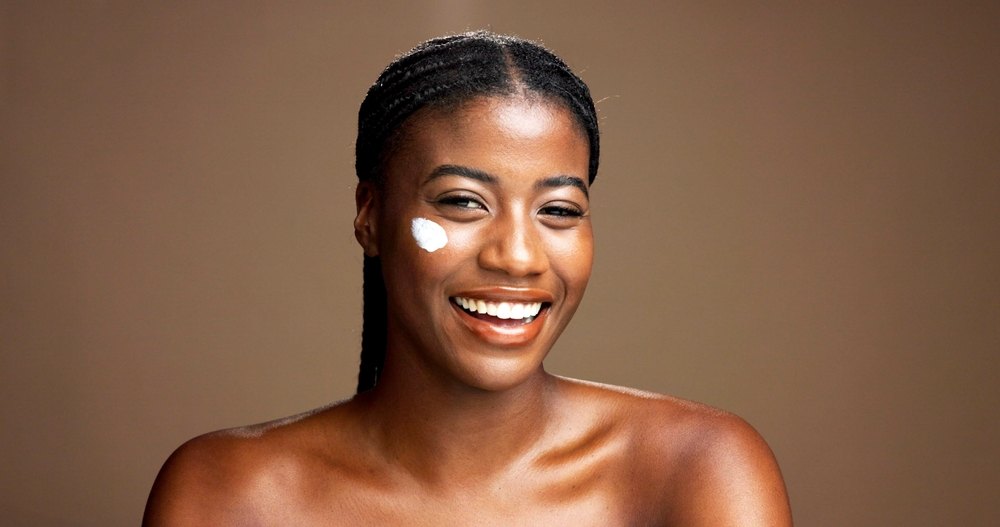
Those stubborn marks from pimples, pregnancy or sunny Sundays can fade. Some of the cheap creams that promise to hurry things along can leave you with worse skin. Here’s how to spot them, and what works instead.
Also see: 8 Beauty mistakes to avoid before big events
It’s 6:40 on a Monday morning on the way to work. You flip your phone camera around, and there they are: the dark marks left behind by last month’s breakout. Your friend’s cousin swears by an unlabelled tub that fades them in a week, R50, cash.
Wanting even, glowing skin is completely normal, and so is wanting it fast. The trouble is that quick and cheap is exactly where the risky ingredients like to hide. Let’s look at what’s in the tub before it goes on your face.
Why that R50 tub works in a week (and why that’s the red flag)
South Africa has taken this seriously for a long time. On 10 August 1990, the country banned the importing, making and selling of cosmetic skin lighteners. The industry body CTFA says cosmetics may not claim to bleach, lighten or whiten, although “brightener” and “toner” are allowed.
The shelves haven’t always kept up. When researchers tested the 10 best-selling lightening creams in Durban, nine contained banned or illegal compounds. That study is a few years old. A later review still noted that these banned ingredients are present in widely available products. Research on mercury products also found that labels are often inaccurate about toxic ingredients, so a tidy-looking label doesn’t guarantee a safe tub.
Meet the usual suspects hiding in the jar
Mercury
It lightens skin by switching down pigment production. The WHO says lightening products with it can cause rashes, discolouration and scarring, as well as nervous, digestive and immune system damage. It can reach the people you love too. Family members can be exposed through contaminated towels, skin-to-skin contact or vapour, and pregnant women, nursing babies and young children are especially at risk.
Strong steroids
Clobetasol and betamethasone turned up in the Durban tests, and both are potent topical steroids. The International League of Dermatological Societies warns that long-term use can cause skin thinning, stretch marks, bruising, persistent redness and visible tiny blood vessels. These are also the creams that can flare badly if you stop them suddenly, so don’t quit a strong one cold turkey without talking to a pharmacist or doctor.
High-strength hydroquinone
Used under a doctor’s supervision, it has a place in dermatology. The problem is the unsupervised, long-term kind. Back in 1966, manufacturers pushed hydroquinone from 3% to more than 8%, and an epidemic of blue-black patches followed. Doctors still see this today, in dark-skinned patients, including Black South Africans, who used hydroquinone products for long periods. The cruel twist is that the cream ends up making the skin darker.
What actually fades marks (it’s slower, and kinder)
Here’s the unglamorous truth. One dermatologist at the Cleveland Clinic puts it this way: you can spend all your money on treatments, but without sunscreen they won’t help, because every bit of sun darkens the spots and triggers more melanin. The standard advice is SPF 30 or higher for daily use. Tinted formulas are worth a look, since many contain iron oxides and help with white cast.
Then come the gentle actives. In a 16-week study, 15% azelaic acid gel applied twice daily reduced acne and the marks it left in people with skin types IV to VI. Niacinamide, a form of vitamin B3, reduces the transfer of pigment within the skin. Neither is quick, so give any product weeks, not days.
One more thing: melanin-rich skin is more prone to pigmentation triggered by irritation, so skip harsh scrubbing, lemon juice and other home hacks that sting. A calm skin barrier fades marks faster than an angry one.
Also see: Easy beauty habits that save you money
Your 60-second label check
Screenshot this before your next pharmacy run or Saturday market stop:
- Check the claims. Words like “lightening”, “bleaching” or “whitening” on a cosmetic are a warning sign in South Africa. Look for “even tone” or “brightening” instead.
- No ingredient list, no purchase. If it’s in an unmarked tub or has no maker’s name and address, walk away.
- Scan for the big four. Look for mercury (also written as calomel, mercurous or mercuric), clobetasol, betamethasone and hydroquinone.
- Question the miracle. If a cream promises dramatic lightening, especially cheaply, it’s worth asking why.
- Patch test. Dab a little on your inner arm for a few days first, especially if your skin is sensitive.
- Budget for sunscreen first. A plain, affordable SPF 30 every morning does more than any fancy serum without one.
If you want to go deeper on what’s in your products, it helps to read the ingredient list like a pro, and a pharmacist is happy to help you decode one.
When to hand it over to a pro
Stop the product and see a pharmacist or doctor if your skin stings or burns, turns grey-blue, gets thin or shiny, breaks out in new pimples, or the marks get darker. The same goes if you’ve used a cream for a long time and aren’t sure what’s in it.
Dermatologists suggest seeing someone if dark patches keep returning or darken despite daily sunscreen. A doctor can check whether it’s melasma, post-pimple pigmentation or something else, and explain safe professional treatments that suit your skin and your budget. Tell them if you’re pregnant or breastfeeding.
Your melanin was never the thing that needed fixing. The label is the thing that needs reading twice.
By HealthLab
Featured image: Supplied/HealthLab
Also see: Why local heritage ingredients are taking over the beauty industry
Be the first to know – Join our WhatsApp channel for content worth tapping into. Click here to join!