
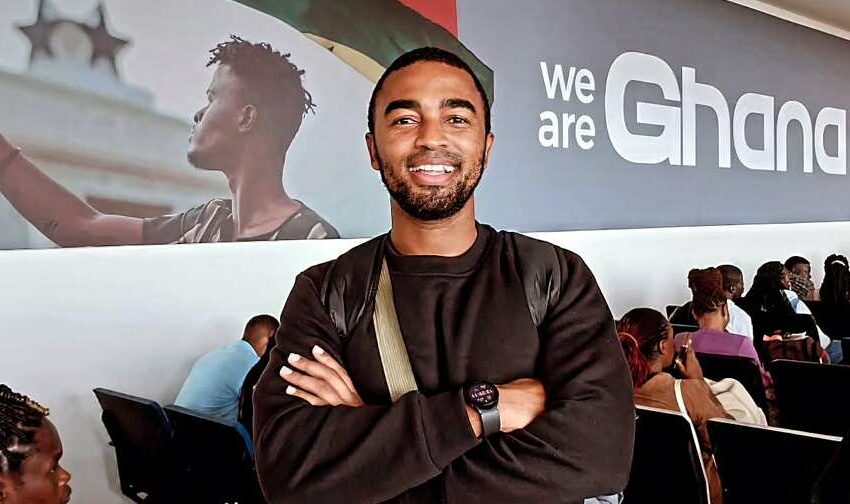
South African commentator Penuel Mlotshwa, popularly known as Penuel The Black Pen, has sparked a conversation about ethnic identity after explaining why he no longer identifies as Zulu.
Also see: Tweeps respond to Penuel The Black Pen’s disapproval of Pearl Thusi’s semi-nude outfit
Penuel, known for his outspoken views on social and cultural issues, argued that tribal identities are human constructs that people can choose to accept or reject.
He compared tribal identity to religion and nationality, suggesting that, just as people can change or leave religious affiliations, individuals should be able to distance themselves from an ethnic identity if they no longer feel connected to it.
Penuel explains why he left his Zulu identity
According to Penuel, he made the decision to leave his Zulu identity behind in 2018, saying that doing so gave him a sense of mental freedom.
His comments have prompted discussion about whether ethnic identity is something people inherit at birth or whether individuals should have the freedom to redefine how they identify.
For Penuel, the latter appears to be particularly important.
He questioned the idea that tribal identity should necessarily determine how someone understands themselves throughout their life, arguing that people should be able to examine the identities they inherit and decide whether they still want to associate with them.
I stopped being Christian in 2006.
I stopped being Zulu in 2018.I respect people’s beliefs but I’m very harsh in pointing out their hypocrisies.
I’m constantly triggered by Black people who selectively pick&choose which parts of their beliefs they follow & then condemn those…
— Penuel The Black Pen (@penuelist_) September 13, 2026
He points to the history of the Zulu Kingdom
Penuel also referenced the history of the Zulu Kingdom, which was established under King Shaka in the early 19th century.
He pointed to the kingdom’s formation in 1816 and argued that the history of the Zulu nation demonstrates how ethnic identities can develop and change over time.
Penuel suggested that many people who identify as Zulu today may have ancestry connected to groups that were absorbed into the expanding Zulu Kingdom, rather than descending solely from the people who initially formed the kingdom.
His argument appeared aimed at challenging the perception that tribal identities have always existed in their current form.
The Zulu Kingdom is 210 years old, being formed in 1816.
If you’re not originally a descendant of uZulu kaMalandela, then you were colonized by uShaka kaSenzangakhona.
Before the Nguni Clans, we were the people of Ntu & the People of The Sun… abaNtu beLanga.
But since your…
— Penuel The Black Pen (@penuelist_) September 13, 2026
Also see: ‘Black people don’t love themselves,’ says Penuel Mlotshwa
Social media users debate views
Penuel’s comments quickly generated mixed reactions, with some social media users responding with humour while others engaged more seriously with his argument.
Some jokingly questioned whether changing one’s ethnic identity could somehow amount to “rewriting DNA,” while others argued that ancestry and cultural identity are two different things.
The debate also highlighted a broader question: Can someone choose to leave an ethnic identity, or is it an inherent part of who they are because of their birth and ancestry?
For some South Africans, tribal identity is closely connected to language, family, traditions and ancestral history. Others believe that personal identity can evolve as people question inherited beliefs and affiliations.
Stopped being Zulu?
New sentences are being formed right before our very eyes https://t.co/WSLdOOE54Z
— Lesilo Rula (@kay_mahapa) September 13, 2026
Please elaborate on how one can stop being something they were born into without a choice. Or are you saying because you don’t abide by what being Zulu means 100% that it’s best to not do Zulu things at all? https://t.co/JyKdqySASy
— Euphonik™♛ (@euphonik) September 13, 2026
A wider conversation about identity in South Africa
Penuel’s comments have therefore opened up a conversation that extends beyond his personal decision.
South Africa’s history has made questions around race, ethnicity, nationality and belonging particularly complex. Communities have distinct languages, histories and cultural traditions, while individuals can also have multiple cultural influences through their families and upbringing.
The reaction to Penuel’s views reflects that complexity, with some people defending the importance of inherited heritage and others supporting an individual’s right to define themselves.
Ultimately, Penuel’s position appears to be that identity should not necessarily be treated as something permanently assigned at birth.
His decision to leave his Zulu identity in 2018 has now reignited a much bigger discussion about heritage, personal choice and what it means to belong in modern South Africa.
Also see: Penuel Mlotshwa shares why he opposes March and March working with AfriForum
Be the first to know – Join our WhatsApp channel for content worth tapping into. Click here to join!


