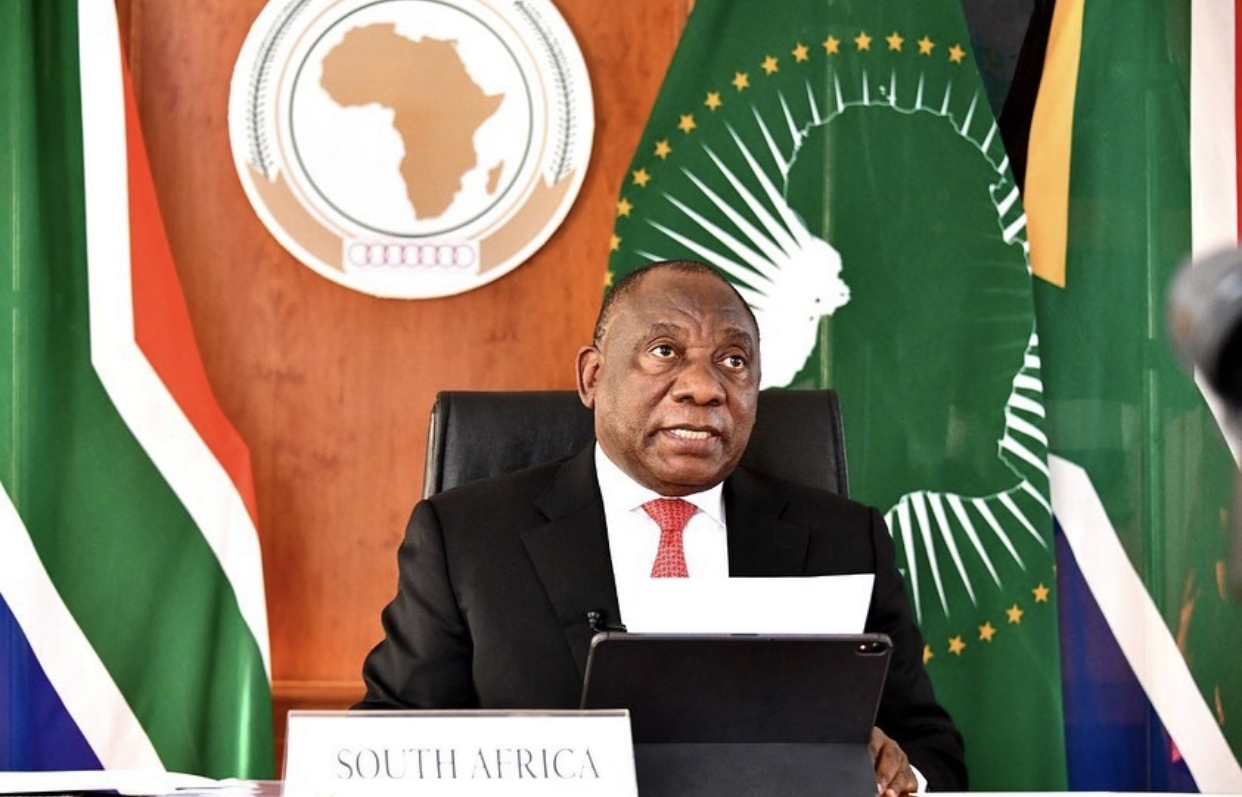
President Cyril Ramaphosa has lauded the milestone of planting seven million trees across South Africa as a major triumph for environmental sustainability and green job creation.
Also see: SHAUNE MOGAILA GUILTY PLEA BRINGS HOPE FOR GOMOLEMO MAVIMBELA’S FAMILY
However, the announcement has met sharp resistance from citizens who feel the government’s focus is misaligned with immediate domestic struggles.
Against a backdrop of persistent inflation, soaring food and electricity tariffs, and lingering economic stagnation tracing back through former President Jacob Zuma’s decade in office, public frustration continues to highlight a growing disconnect between environmental achievements and daily economic survival.
Environmental achievement and green job targets
The seven million trees initiative forms part of a broader national afforestation and ecological restoration campaign designed to combat climate change, enhance biodiversity, and restore degraded ecosystems.
Proponents of the programme emphasise that green infrastructure investments generate sustainable employment opportunities, particularly in rural communities through land rehabilitation and forestry management.
Addressing the nation, President Ramaphosa framed the milestone as a key pillar in building long-term climate resilience and delivering environmental justice to marginalised communities that historically lacked green spaces.
Also see: EFF RAMPS UP CAMPAIGN TRAIL AHEAD OF SOUTH AFRICA LOCAL ELECTIONS
The country is in a serious crisis and the president that everyone pinned their hopes on is talking about trees.
— Kgoshi Ya Lebowa (@Mothematiks) October 6, 2026
Economic backdrop and the shadow of the Zuma era
Despite the ecological victory, the announcement lands at a tense time for South African households facing severe cost-of-living pressures. Critics argue that environmental policy updates ring hollow while citizens struggle to afford necessities, fuel, and rising municipal services.
This economic strain is compounded by structural vulnerabilities that took root during the Zuma administration, where years of state capture, policy uncertainty, and systemic corruption crippled key state-owned enterprises like Eskom and Transnet.
The resulting infrastructure failures and low economic growth continue to hamper the current administration’s ability to deliver swift relief to overextended consumers.
Public scrutiny and policy priorities
The contrast between environmental celebrations and everyday financial anxiety has fueled widespread dialogue across public platforms and civic networks. Opponents and community activists argue that while long-term environmental sustainability is essential, urgent state intervention is required to stabilise energy costs, curb food inflation, and generate formal sector employment.
As the presidency continues to push for a just transition to a greener economy, balancing critical climate goals with immediate relief from historical and present economic hardship remains one of the government’s most delicate challenges.
Also see: BHEKI CELE FACES POSSIBLE PROSECUTION OVER ALLEGED CAT MATLALA-LINKED BENEFITS
Be the first to know – Join our WhatsApp channel for content worth tapping into. Click here to join!