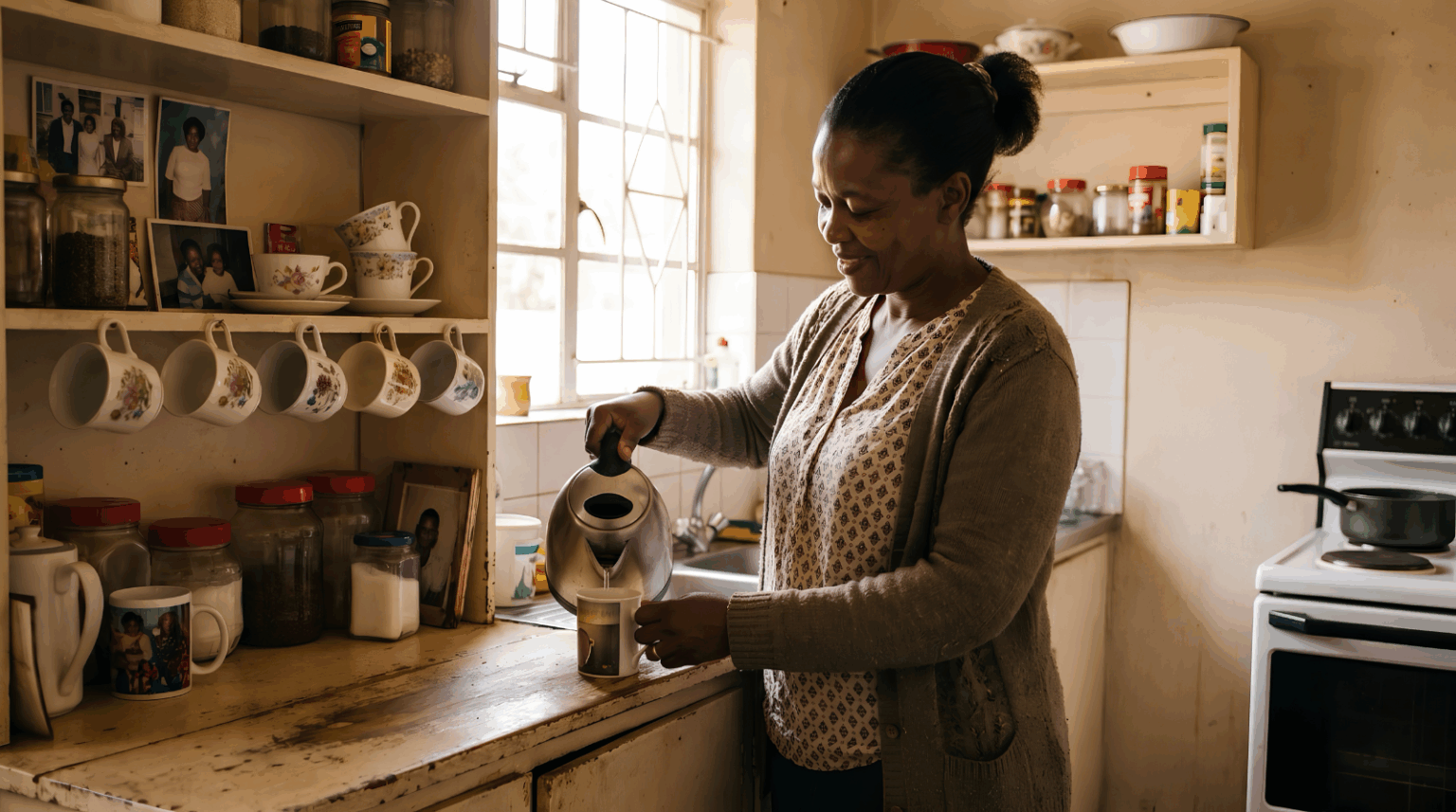
Every day, thousands of South African women leave their own families to help other households function. They clean our homes, care for our children, support ageing parents and make it possible for many of us to balance work and family life.
Yet domestic employment is still too often treated differently from other employment. UIF registration gets put off. Payslips seem unnecessary. Written agreements feel overly formal. And paying the legal minimum is sometimes considered enough.
Also see: Can your employer challenge your sick note?
“Domestic workers are employees, yet too many are still employed as though the normal responsibilities of employment somehow stop at the front door of a private home,” says Janine Kane-Berman, Chief Legal Officer at AskMandla.
“Paying correctly, registering for UIF and providing proper employment records are not acts of generosity. They are fundamental parts of being a responsible employer.”
Kane-Berman highlights five questions every domestic employer should ask.
1. Are you paying a fair wage – or just the minimum?
Employers must comply with South Africa’s national minimum wage, which is currently R30.23 per hour. For a full-time domestic worker (eight hours a day), this equates to R1,209.20 per week or R5,239.46 per month.
But the legal minimum is exactly that: a minimum.
“Minimum wage tells you the least you can legally pay. A fair wage asks what you should be paying for the work someone does and the realities of earning a living,” says Kane-Berman.
AskMandla’s Fair Wage Calculator helps employers assess what a fair wage could look like rather than simply defaulting to the statutory minimum.
2. Is she registered for UIF?
If your domestic worker works for you for more than 24 hours a month, registering and contributing to UIF is a legal requirement. More importantly, it gives her access to an important financial safety net.
Consider a domestic worker earning approximately R5,240 a month. If she takes maternity leave, UIF could provide roughly R13,760 over the full 121-day benefit period.
For a worker at the same salary who has contributed long enough to build up the maximum available unemployment credits, losing her job could result in UIF benefits totalling approximately R23,600 if she qualifies for and claims the full available period.
“For an employer, UIF can look like paperwork. For a woman who has just had a baby or lost her job, it can mean thousands of rands when she has no salary coming in,” says Kane-Berman.
3. Does she have a contract and payslip?
Domestic employment should not be invisible simply because it takes place in a private home.
A written employment agreement should clearly set out working hours, responsibilities, remuneration, leave and notice periods. Employers must also provide the required written information about an employee’s pay.
Also see: Soft skills employers may value now more than ever
A payslip creates a formal record of employment and earnings – something many workers need when they are asked for proof of income when attempting to open a bank account, access insurance, or apply for credit.
“Someone can work for the same household for years and have remarkably little documentation to show for it,” says Kane-Berman.
“Formalising the relationship recognises domestic work for what it is: employment.”
4. Is she protected if she is injured at work?
Nobody likes to think about someone getting hurt at work. But accidents happen.
A domestic worker can slip on a wet floor, fall down the stairs, cut herself badly in the kitchen or get injured while doing work around your home.
Employers therefore need to meet their obligations under the Compensation for Occupational Injuries and Diseases Act (COIDA), which provides protection when employees are injured or become ill as a result of their work.
Even if your domestic worker works for you for less than 24 hours a month, you still need to register them for COIDA.
“Good intentions are not a substitute for proper protection when something goes wrong,” says Kane-Berman.
5. Do you treat her like an employee?
Many South Africans affectionately describe a long-standing domestic worker as “part of the family.” But that sentiment should never become a substitute for employment rights.
Respect means paying correctly and on time, honouring working hours and leave, communicating clearly and creating an environment where an employee can raise concerns.
“Calling someone ‘part of the family’ means very little if she doesn’t receive the basic protections she is entitled to as an employee,” says Kane-Berman.
Women’s Month is a time to recognise the contribution women make to South African households. But appreciation is not enough.
“The best way to show that you value the woman who works in your home is to be a good employer all year round,” says Kane-Berman.
“Ask yourself: am I paying her fairly? Is she registered for UIF? Does she receive a payslip? Does she have a written agreement? Is she protected if she gets hurt at work?
If the answer to any of those questions is no, Women’s Month is a good time to fix it.”
Also see: Why understanding your payslip is important
Be the first to know – Join our WhatsApp channel for content worth tapping into. Click here to join!