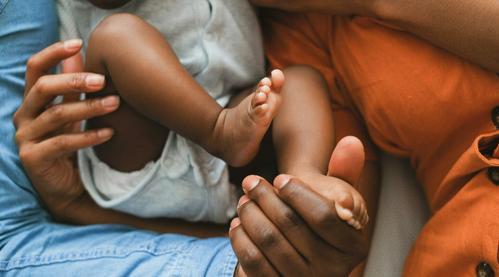
For parents, nothing matters more than their child’s health and happiness. So, when a baby is born with clubfoot—a condition where one or both feet turn inward—it can feel overwhelming. However, the good news is that this condition is not only treatable but often entirely correctable with early care and attention.
Health publications break down what clubfoot is, what causes it, and the treatment options available to help your child walk, run, and play like any other kid. The Cleveland Clinic defines clubfoot as a birth defect where a baby’s foot or feet turn inward.
It is said to occur due to shorter and tighter tendons in the leg and foot, causing the foot to twist. “Extensive surgery used to be the main treatment to correct clubfoot. But today, healthcare providers typically use a combination of nonsurgical methods and a minor procedure.”
The above clinic mentions that this condition can be classified into two types: isolated clubfoot, which is the most common and unrelated to other medical issues, and nonisolated clubfoot, which occurs alongside other health conditions.
According to Kids Health, clubfeet are idiopathic, meaning they are not inherited. They are said to be likely genetically inherited and run in families. “This tightness may be related to differences in blood circulation or how nerves receive signals in the affected legs. Other theories for the causes of clubfeet include defects in the development of the bones, tendons, or muscles or some mechanical obstruction in utero.”
The above source also claims that clubfoot can also be part of a syndrome or birth defect.
The Nationwide Children’s Hospital mentions that this deformity can be corrected without surgery through gentle massage and manipulation, followed by a cast to keep the correct position.
Another treatment suggested by the hospital is a procedure called the tenotomy.”The tenotomy may be done in the clinic without anaesthesia, it may also be done in the operating room with a very thin scalpel while the child is under anaesthesia. The tendon will heal and reattach within 2 to 3 weeks.”
Also see: How to navigate baby weaning