Cricket South Africa has explained how its new pitch system actually works, and why it is not the drop-in model people think it is, nor a threat to conditions that have always defined South African cricket.
Also see: Proteas seal ODI series win over Australia with 2-0 lead
The pitches CSA is introducing at grounds around the country have been widely described as drop-ins. Hilbert Smit, CSA’s long-serving pitch consultant, pushes back on that label. “We are introducing an exchangeable pitch system, and we don’t want to call it drop-ins because that’s not what it is,” he told Cricinfo.
In Australia, a finished pitch is grown off-site and delivered whole into a stadium on a large transport vehicle before being removed again afterwards. That approach was never viable in South Africa.
“It would have cost us about ten times what it’s costing us now, and there’s just no space for the vehicle to come into our stadiums,” Smit said.
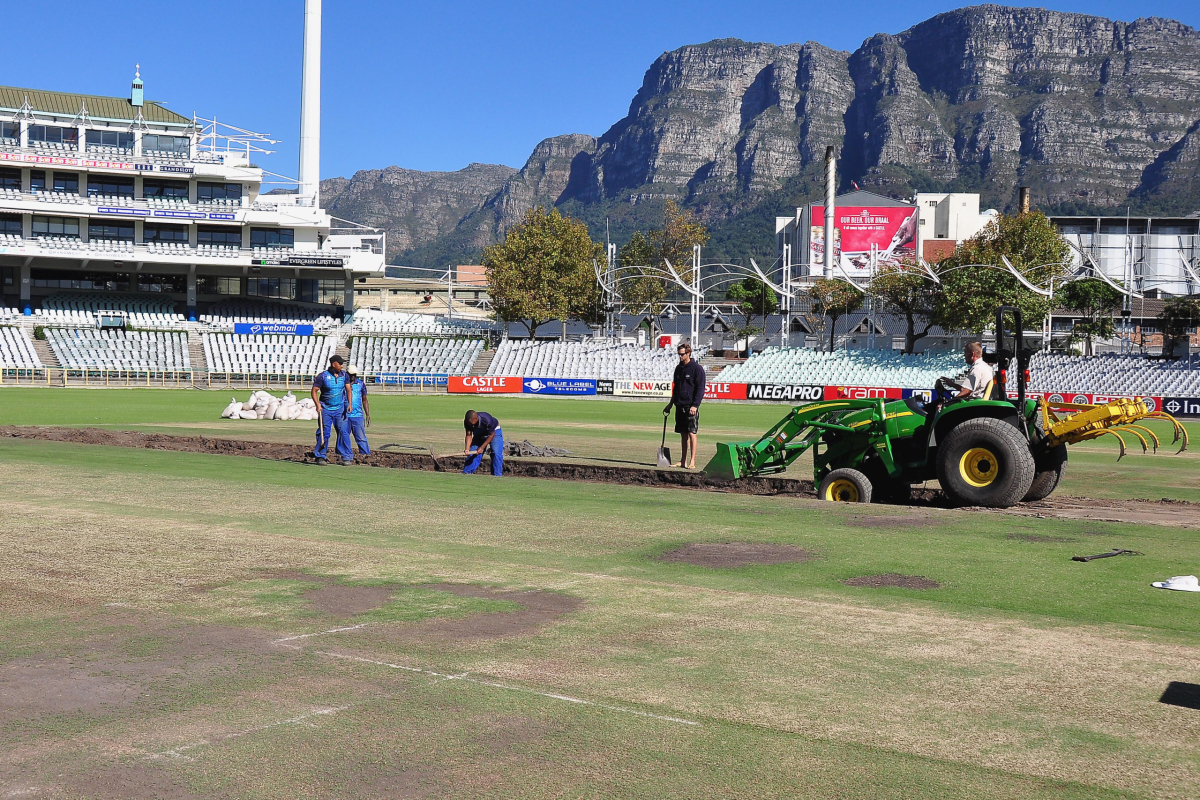
Instead, each pitch is grown in a steel tray on the edge of the same square it will eventually join, then moved into position using a hovercraft-style method, with air cushions lifting the 32-tonne tray so it can be slid into place.
Every ground grows its own surface using its own bulli soil and its own choice of Cynodon grass, sourced from a nursery in the KwaZulu-Natal Midlands but selected differently by each venue depending on what suits local conditions.
Also see: Proteas win: 5 Moments that stood out
According to Smit, the growing process itself, managing fertility and moisture and letting the grass establish, mirrors any other pitch build. What sets it apart is that the work happens inside a contained tray, cut off from the rest of the square, which he said leaves groundsmen with tighter control over the outcome.
That is also why the system should not alter the character of South African pitches. Evan Flint, the former Newlands and Wanderers groundsman now consulting at Kingsmead, said the bounce and carry that have always defined local surfaces should be retained, since the pitches are still grown from the same soil and grass.
The full process, from planting to match-readiness, takes 18 months, a timeline CSA is holding to after the pitches used at the 2024 T20 World Cup in New York were rated unsatisfactory following a rushed build.
Six SA20 venues have committed to the system: the Wanderers, Kingsmead, Newlands, St George’s Park, Boland Park and SuperSport Park. The Wanderers is furthest along and remains the only ground to have hosted a match on one, a One-Day Challenge fixture in March rated 7.5 out of 10 by match officials.
None of the pitches will be used for Tests yet, and only the Wanderers is expected to be ready in time for the 2027 World Cup.
Originally published by SA Cricket Magazine.
Also see: Nonkululeko Mlaba comes up big at Cricket South Africa Awards
Be the first to know – Join our WhatsApp channel for content worth tapping into. Click here to join!