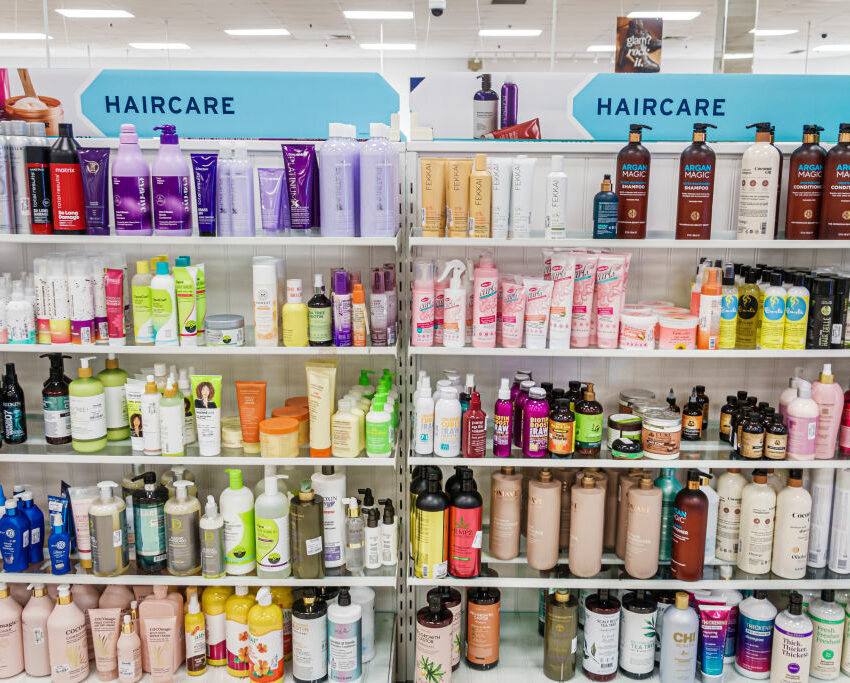
The natural hair movement has been in full swing since the 2010s, a revolution in which women in the Black diaspora have decided to move away from relaxers and chemical straighteners and let their hair grow naturally.
Also see: Khanyi Mbau channels Edna Mode with striking new hairstyle
However, since then, the haircare market for textured hair hasn’t grown in line with its consumers.
What does textured hair need that straight hair doesn’t?
According to June Lim, a Beauty Health Management graduate, CEO and Founder of Bephor, coily and curly hair requires a routine centred on balancing oil production and distribution. The kinks in the hair make it so the oils from the scalp struggle to move down the shaft, leaving that actual hair dry and at risk of breaking.
Straight hair, on the other hand, needs products that strip the hair of oils. This is because oils travel much more easily down the shaft, as there are no kinks in the hair.
“When products are developed for a broad range of hair types without considering these specific characteristics, they may not adequately address the needs of textured hair and, in some cases, may even worsen the condition of the scalp and hair,” June told BONA.
Distinction between Afro haircare and Western haircare products
Products normally on the market for textured hair are hydration- and moisture-retention-focused, which are water-based and oil-based. Conversely, Western hair care products focus mainly on oil reduction.
The expert speaks on the unique formulation of the Bephor line. June states that they approach beauty through a holistic Eastern approach.
“Rather than relying on harsh ingredients or aggressive approaches simply to create an immediate cosmetic effect, we focus on developing gentle but effective ingredients and formulations that support the long-term health of the scalp and hair,” notes the founder.
Also see: The ultimate guide to scalp hydration
Misconceptions around textured hair
June shared that the most common misconception around textured haircare products is that: “natural automatically means safe.”
Instead, it is the formulation that is significant. A natural ingredient can both have benefits and cause irritation depending on the concentration and the combinations in the product.
“I would like consumers, retailers, and beauty editors to look beyond the idea of African haircare as simply a ‘niche’ category. It is a specialised area of haircare designed to address the specific structure and needs of a significant consumer group.”
Also see: From scalp to shaft: How to care for your textured hair
Be the first to know – Join our WhatsApp channel for content worth tapping into. Click here to join!