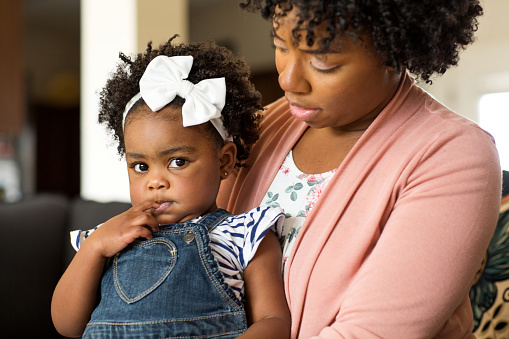
If your toddler is bored, you may want to resist the instinct to immediately find something to entertain them.
While boredom can feel like a parenting problem, a little unstructured downtime can actually support healthy toddler development. Here’s why.
Also see: Questions to ask before posting your toddler on the internet
Boredom teaches toddlers to entertain themselves
When there isn’t an adult-led activity waiting, toddlers have to decide what to do next. That small act of choosing helps develop independence and a sense of agency.
Good Inside states that boredom can also teach toddlers to sit with discomfort and learn to self-regulate.
They learn they don’t need an adult (or a snack, or a screen) to “make it better.” Instead, they learn to sit with and navigate tricky feelings on their own.
Boredom sparks creativity and imagination
According to Bright Horizons, boredom can help children learn to think outside the box, experiment and dream up their own worlds.
A toddler who has nothing planned may turn a blanket into a superhero cape, build a tower from boxes or invent an elaborate game with a few household objects.
This kind of open-ended play allows children to experiment, pretend and come up with their own ideas.
Also see: 7 Ways to make storytime more engaging for your toddler
Boredom builds problem-solving skills
Being bored gives toddlers a chance to work out what might make things interesting again. They may try different toys, combine objects or change the rules of a game.
Rather than providing an immediate solution, parents can offer a gentle prompt such as, “What could we do with this?” and let their child take the lead.
Boredom gives their brains a break
Toddlers don’t need constant stimulation. Unstructured play provides an opportunity to move between activities at their own pace and simply explore.
Play supports executive-function skills, including attention, cognitive flexibility and self-control.
So, should you let your toddler be bored?
Absolutely – within reason. Boredom doesn’t mean ignoring your child or withholding interaction.
Keep them safe, offer access to simple toys and everyday objects, and be available when they want connection.
Most importantly, you don’t have to fill every quiet moment. Sometimes, saying “I’m sure you’ll think of something” is exactly the space a toddler needs to start playing, imagining and learning.
Also see: 4 Simple ways to support your toddler’s brain development
Be the first to know – Join our WhatsApp channel for content worth tapping into. Click here to join!